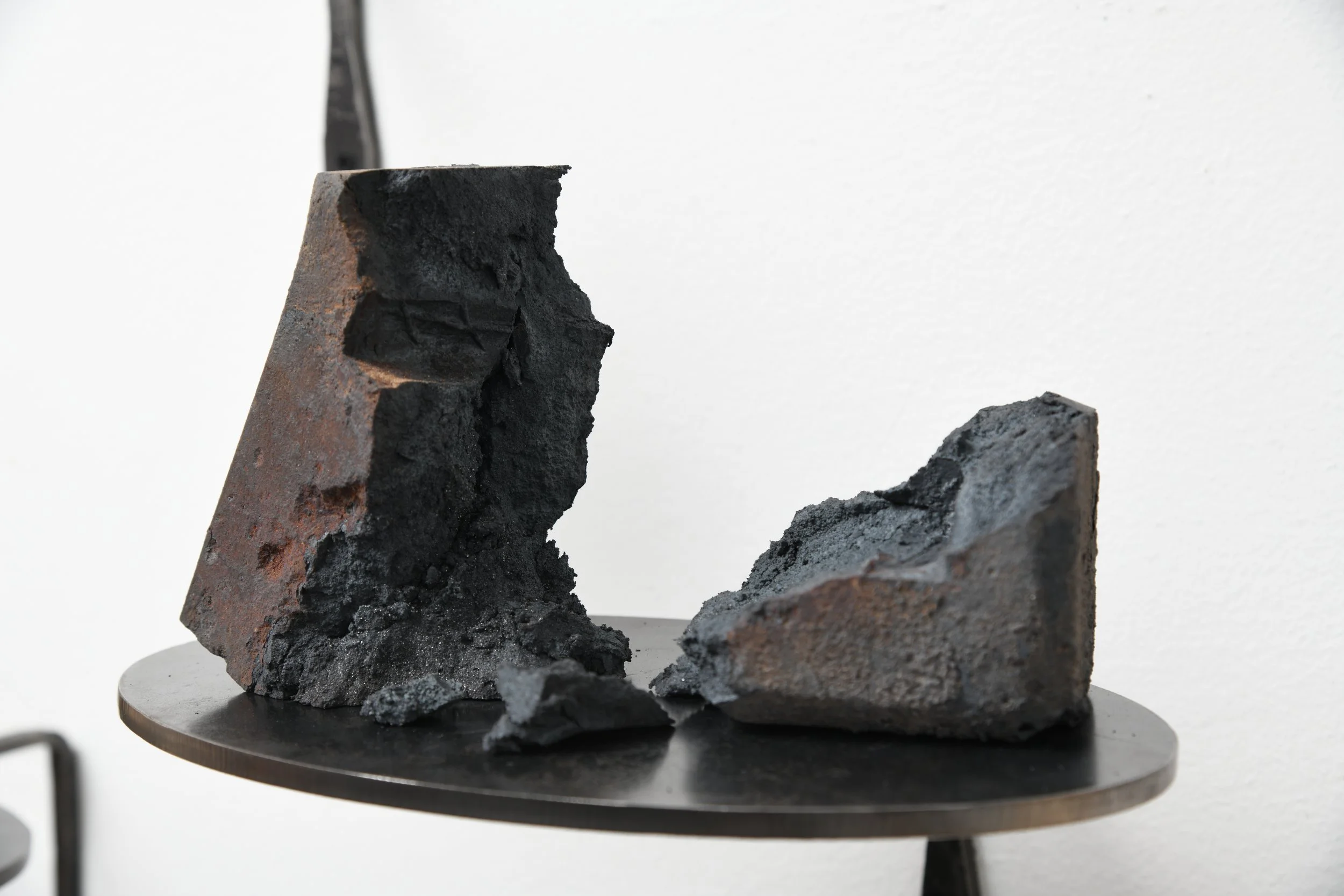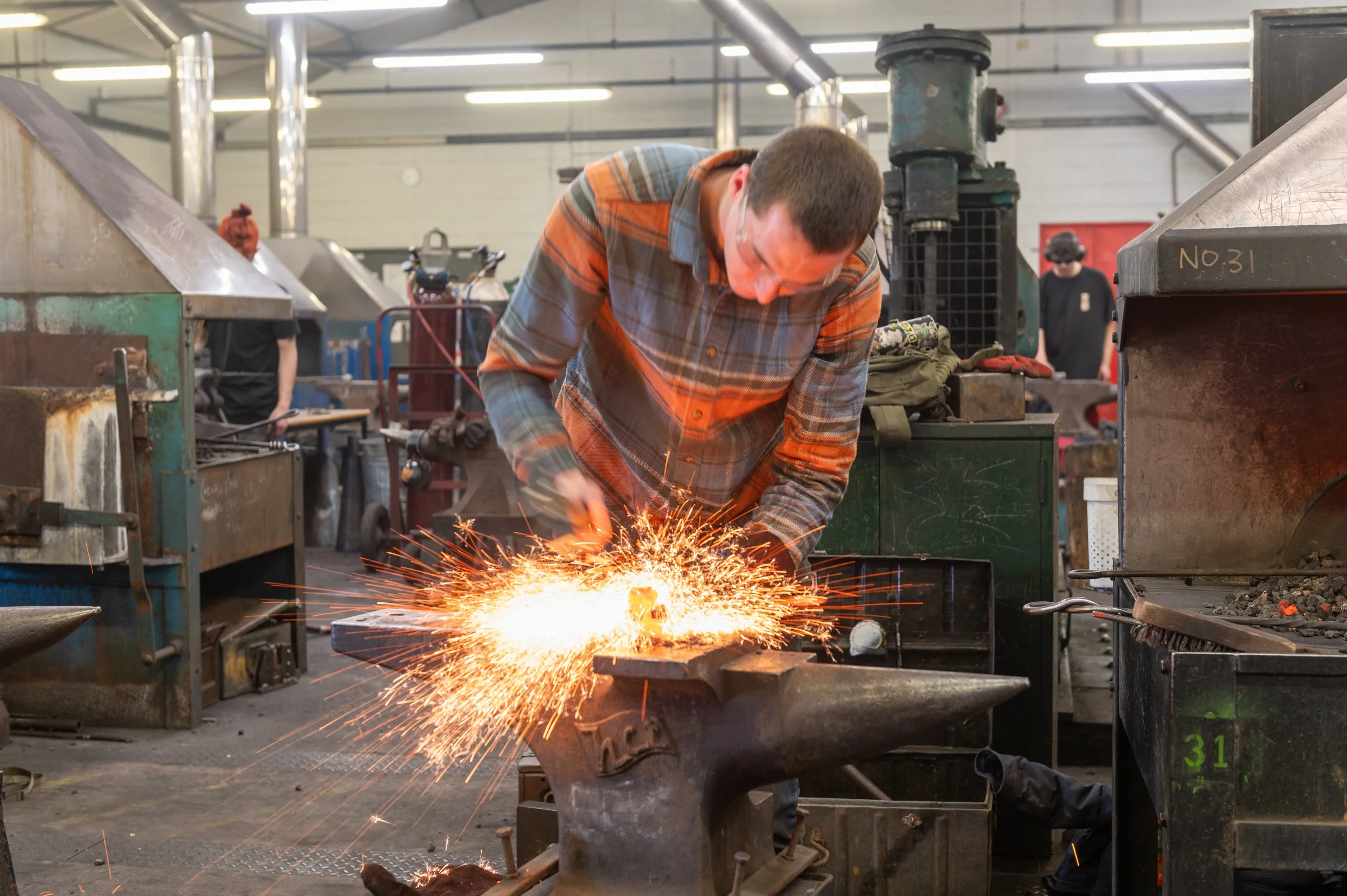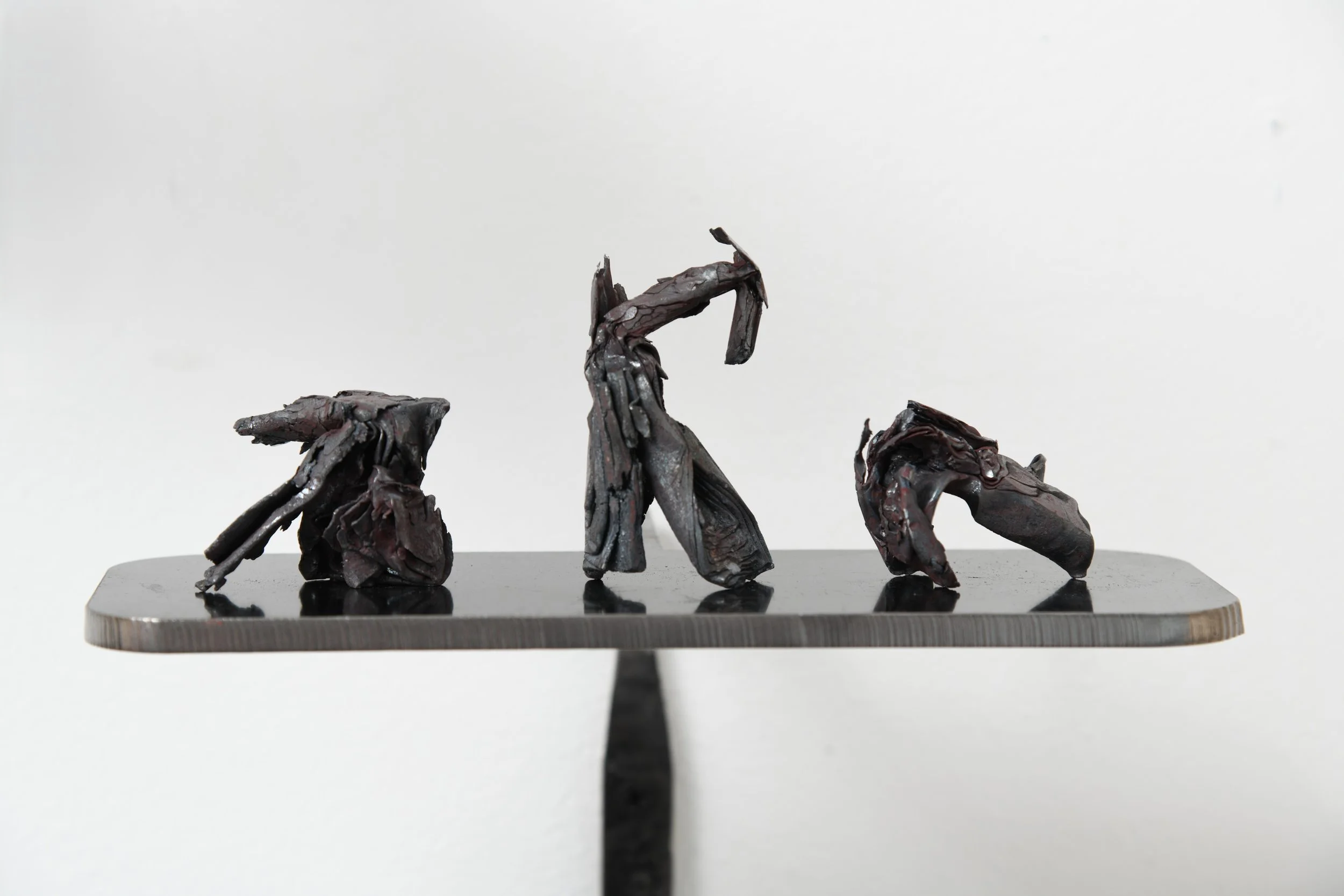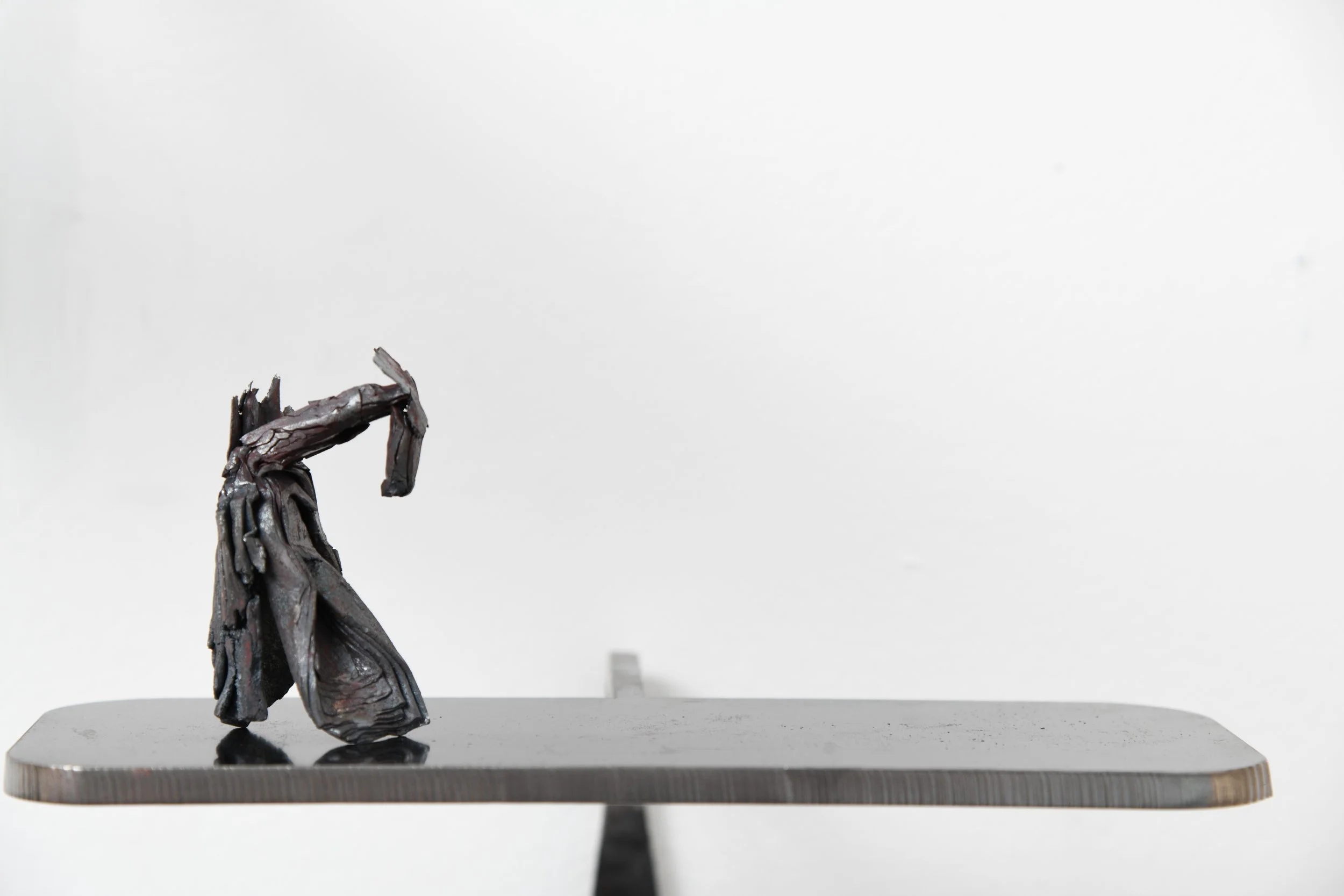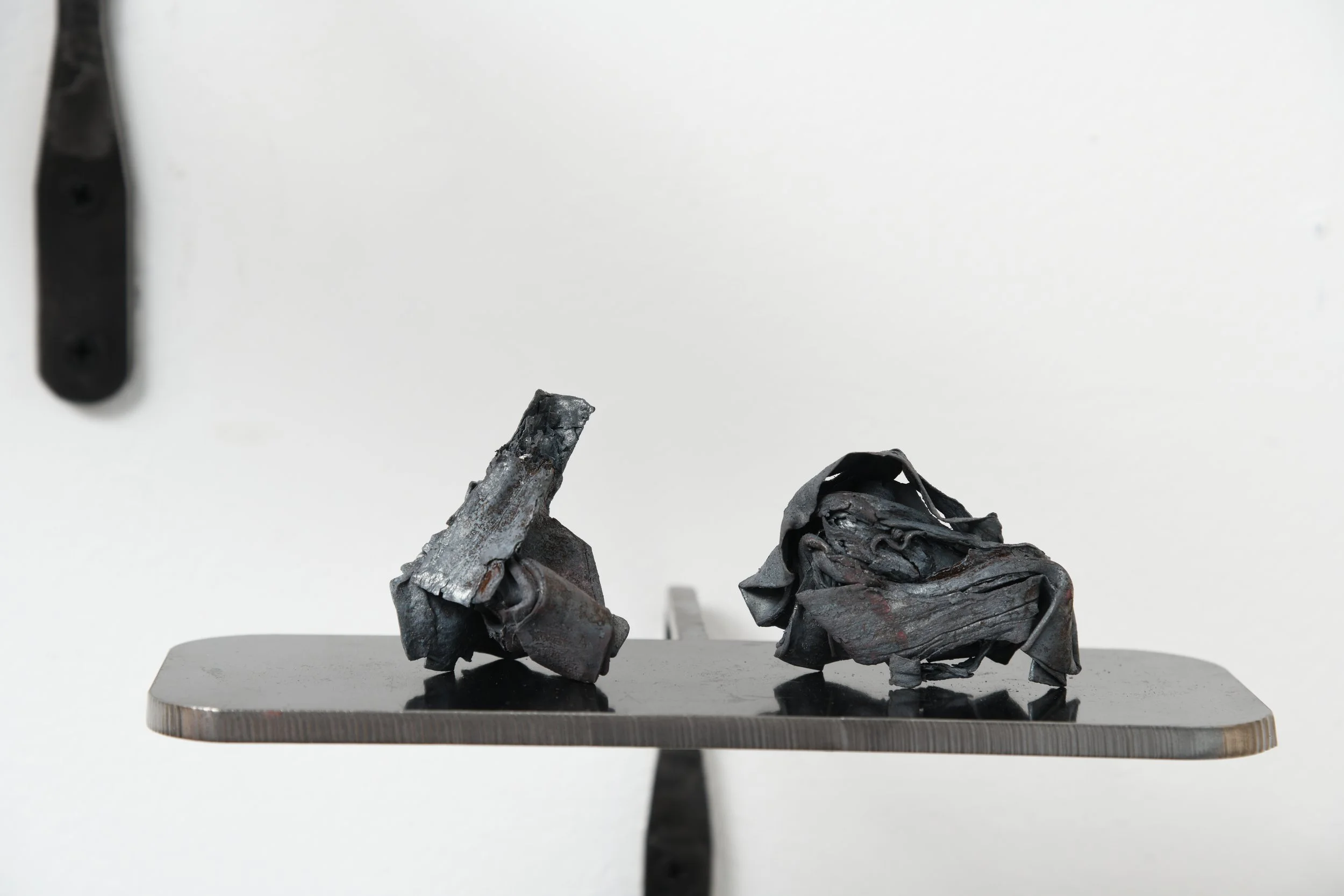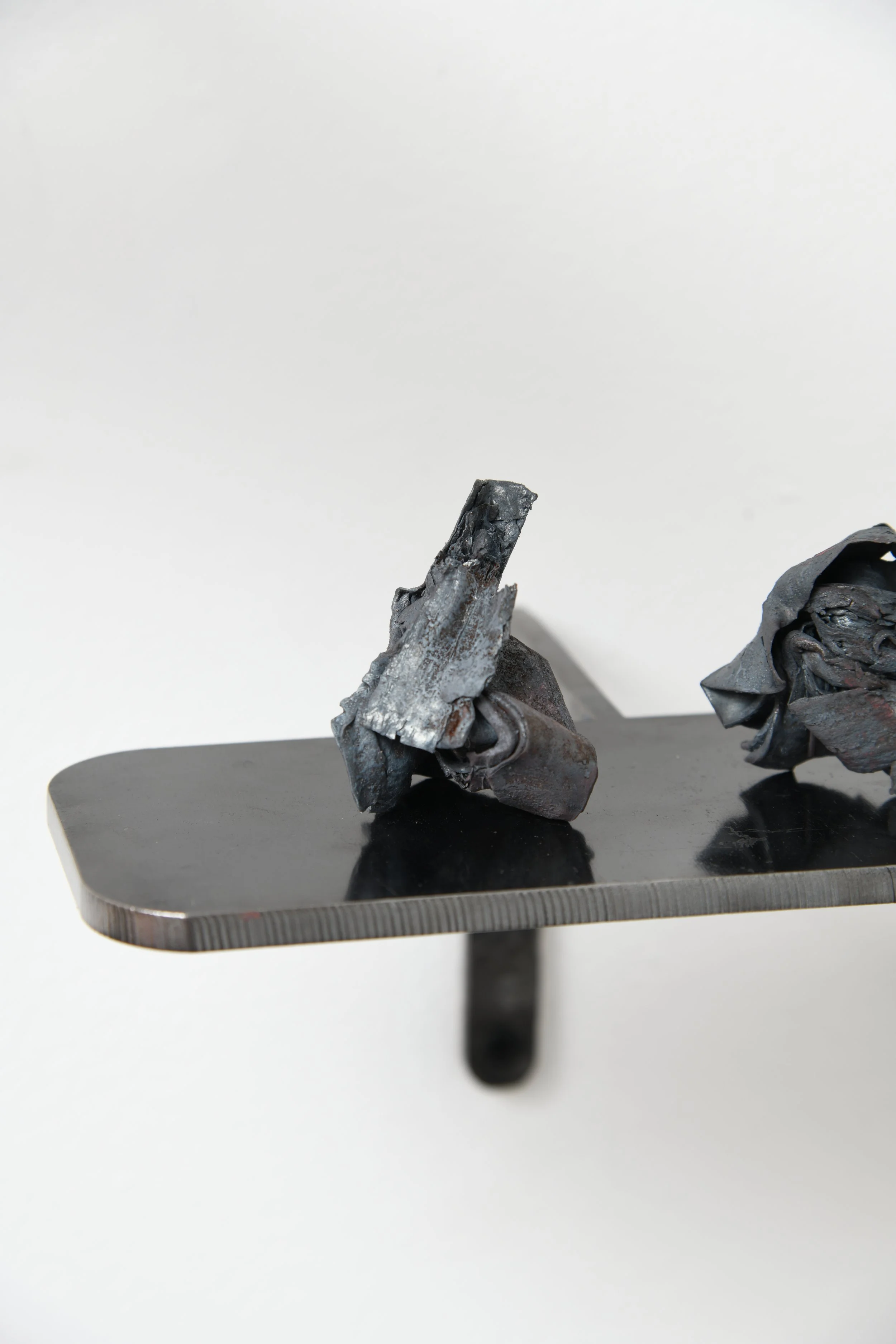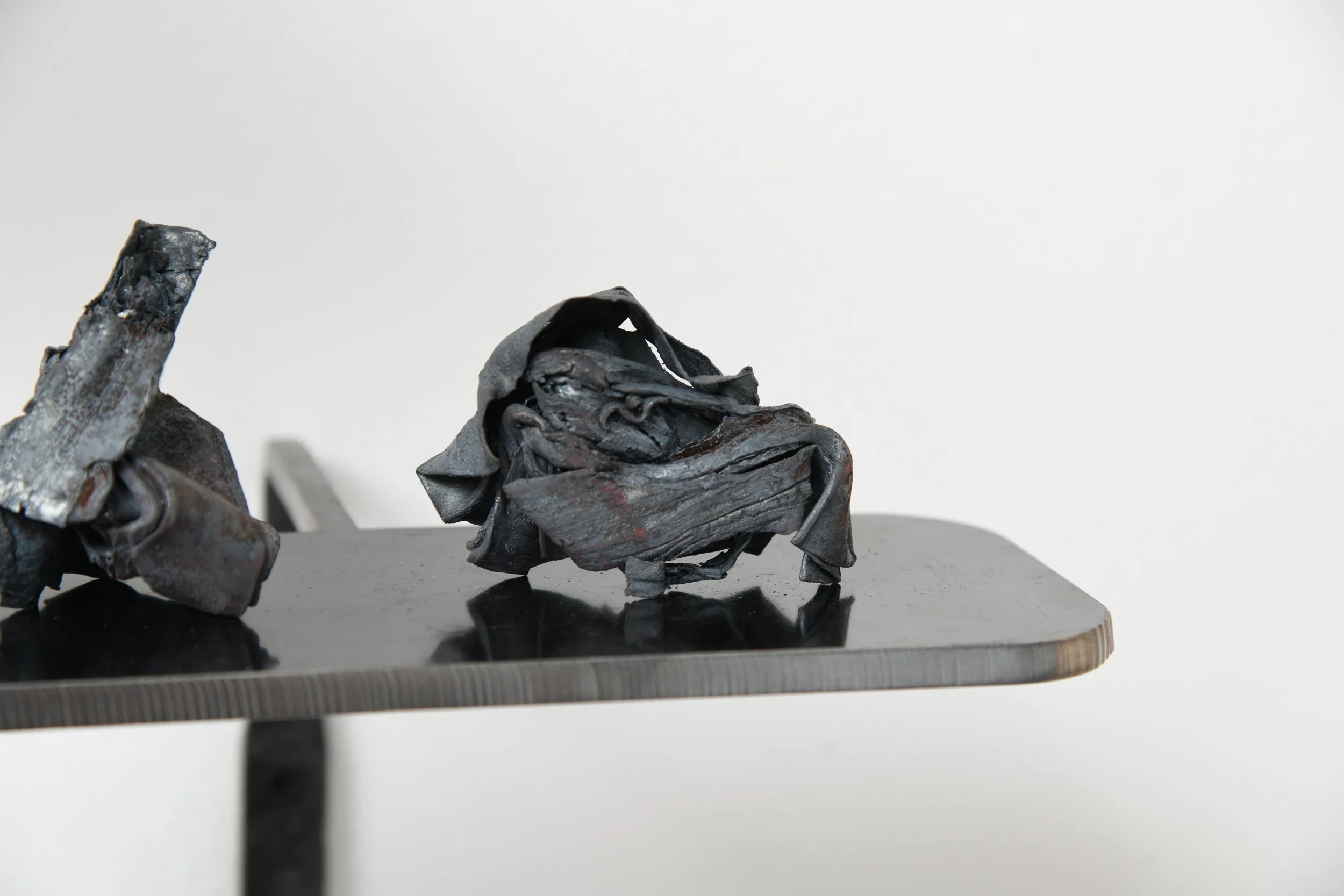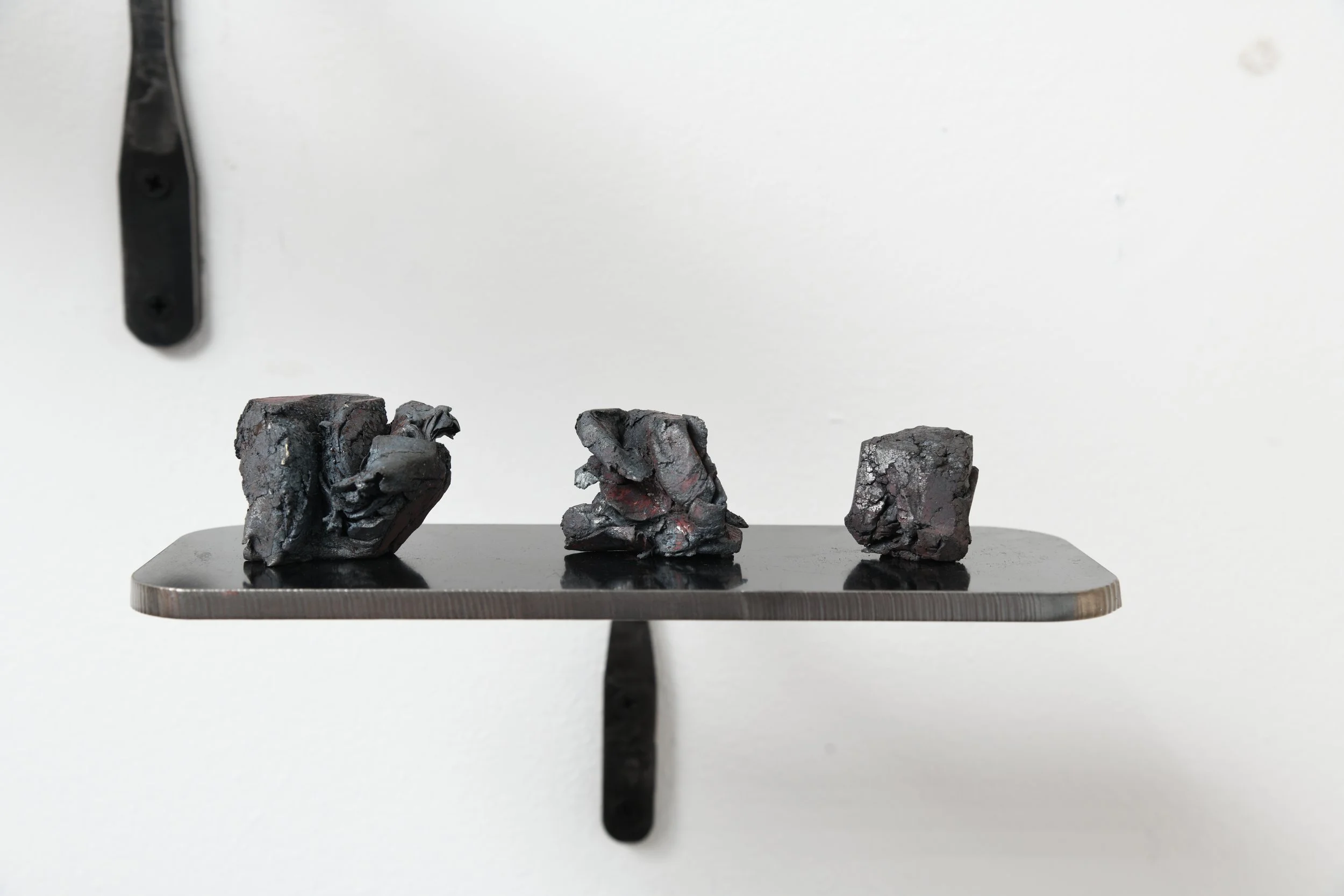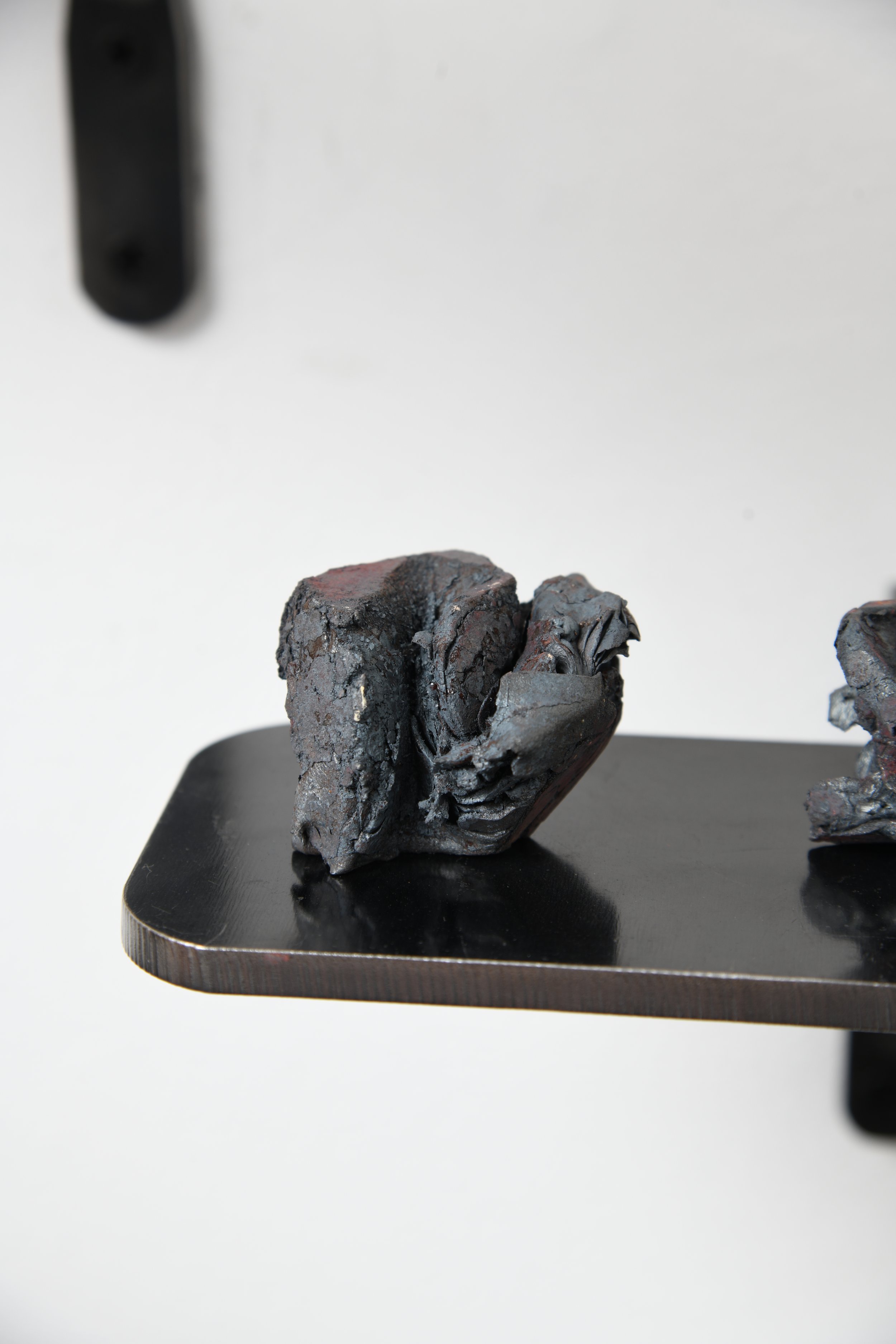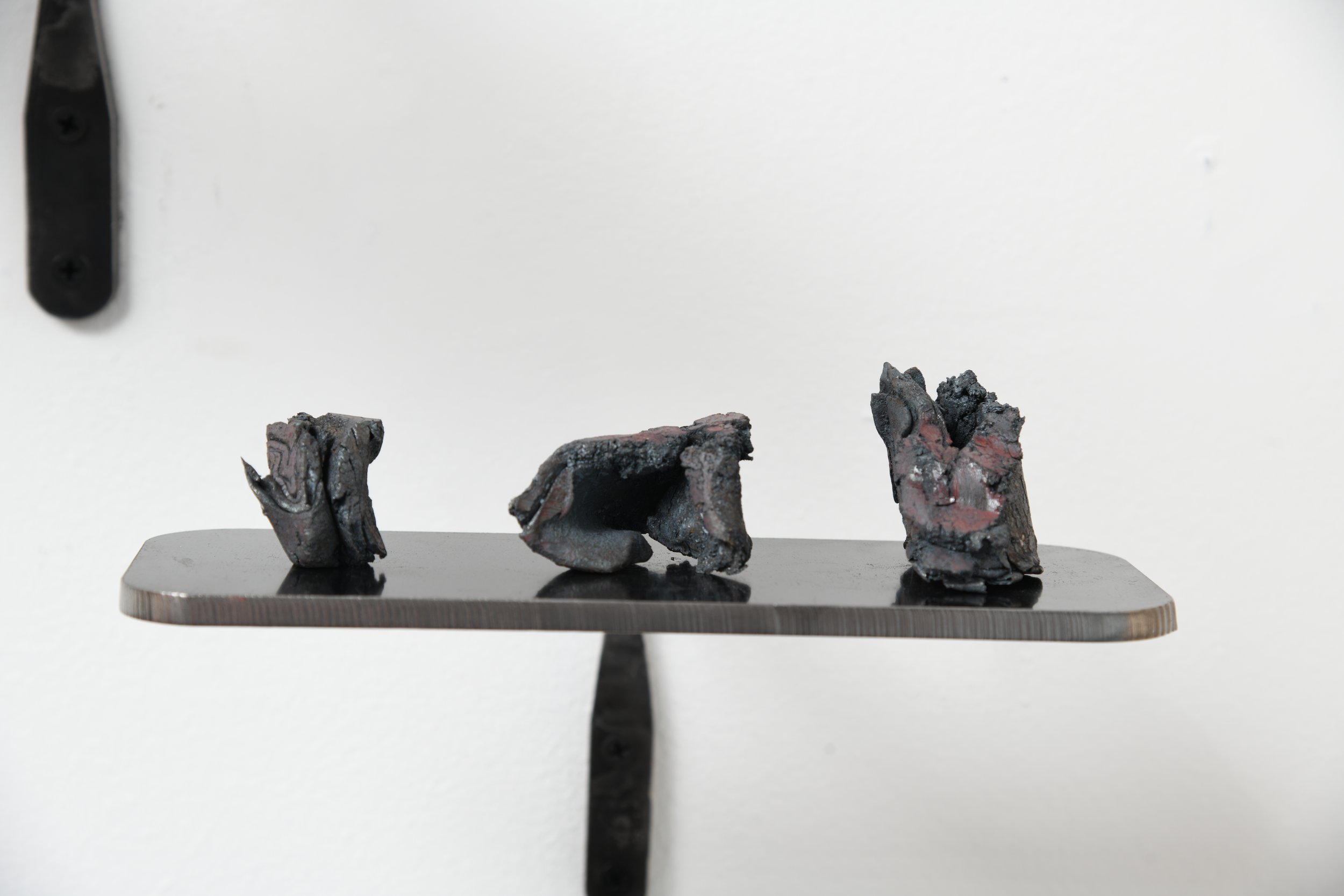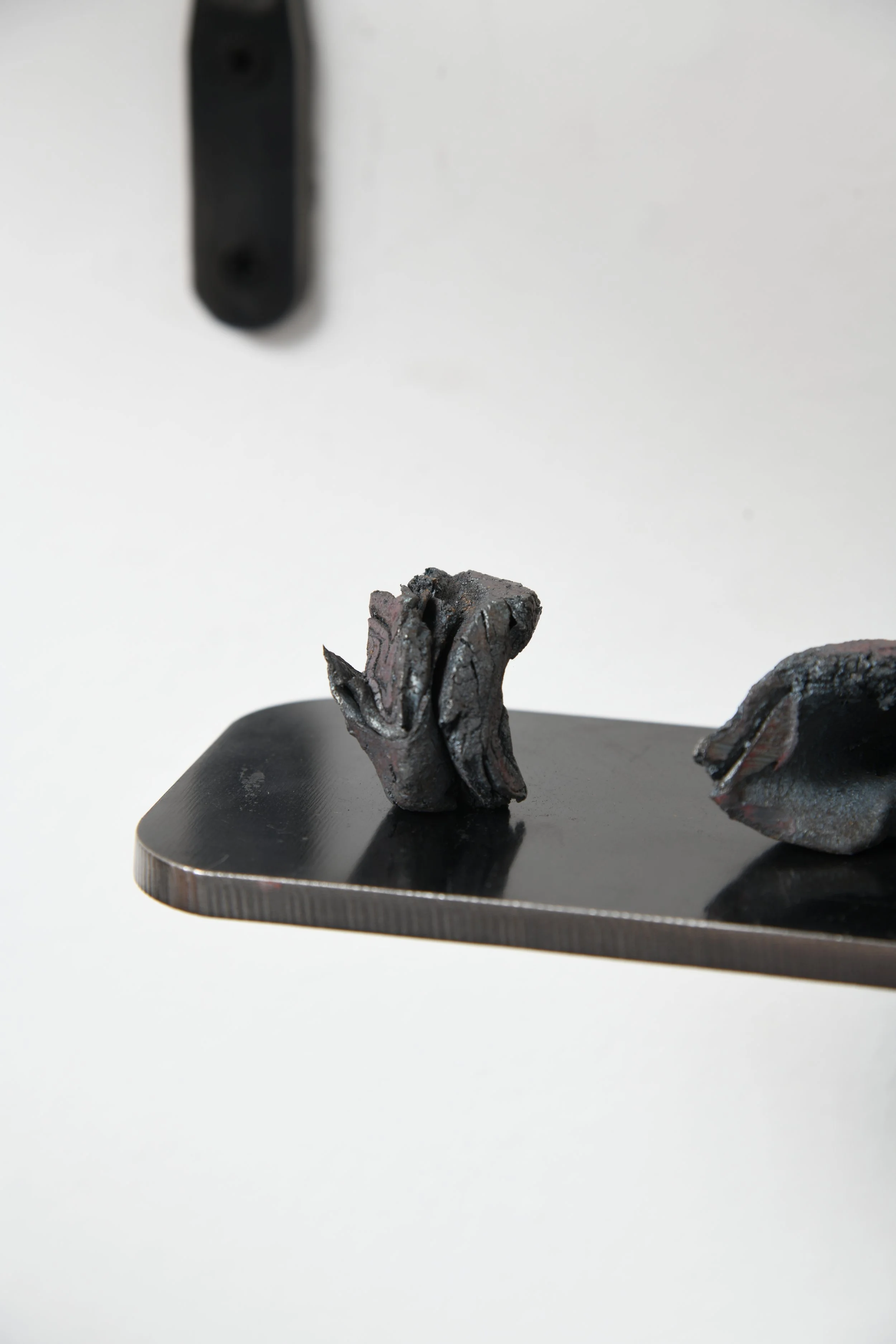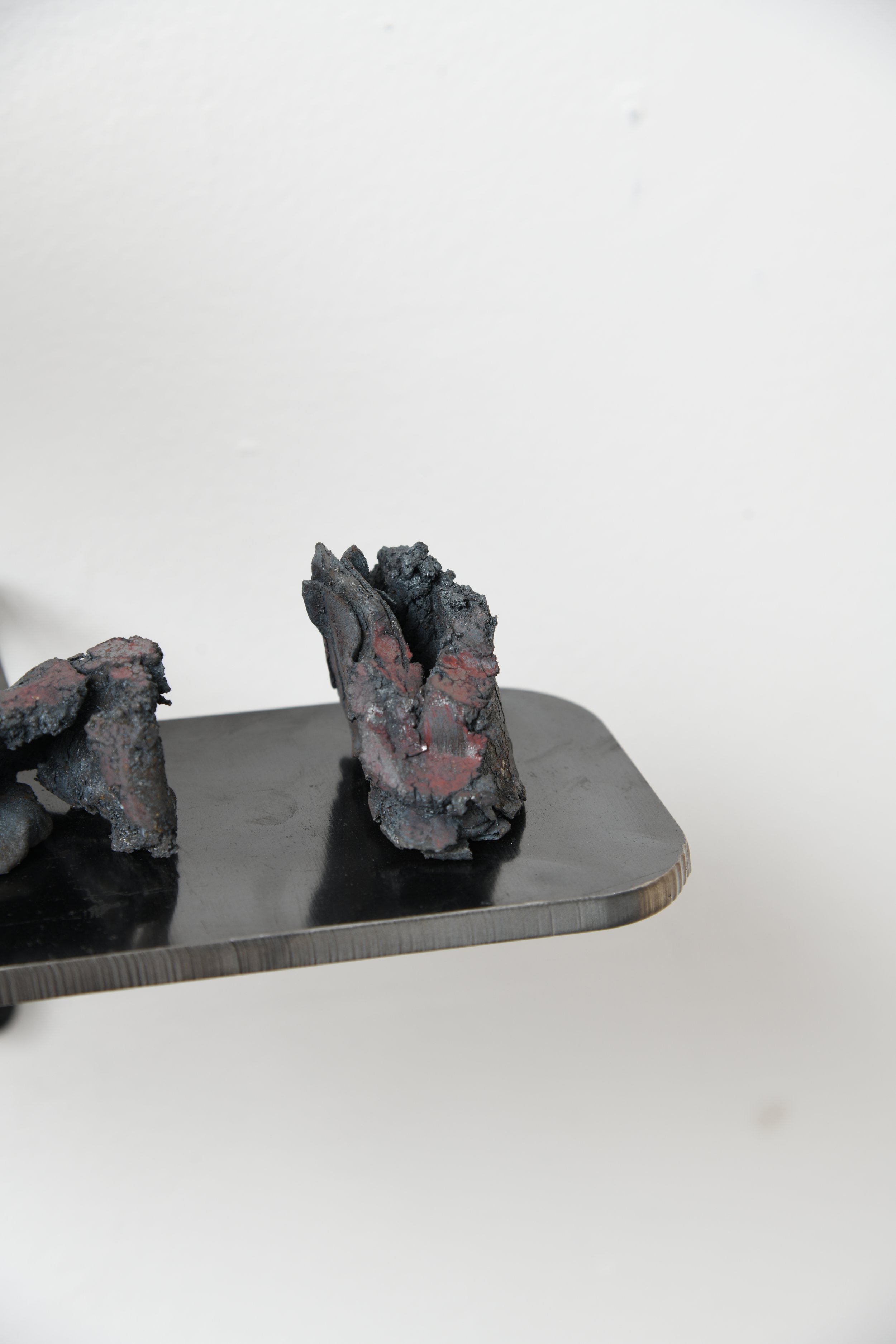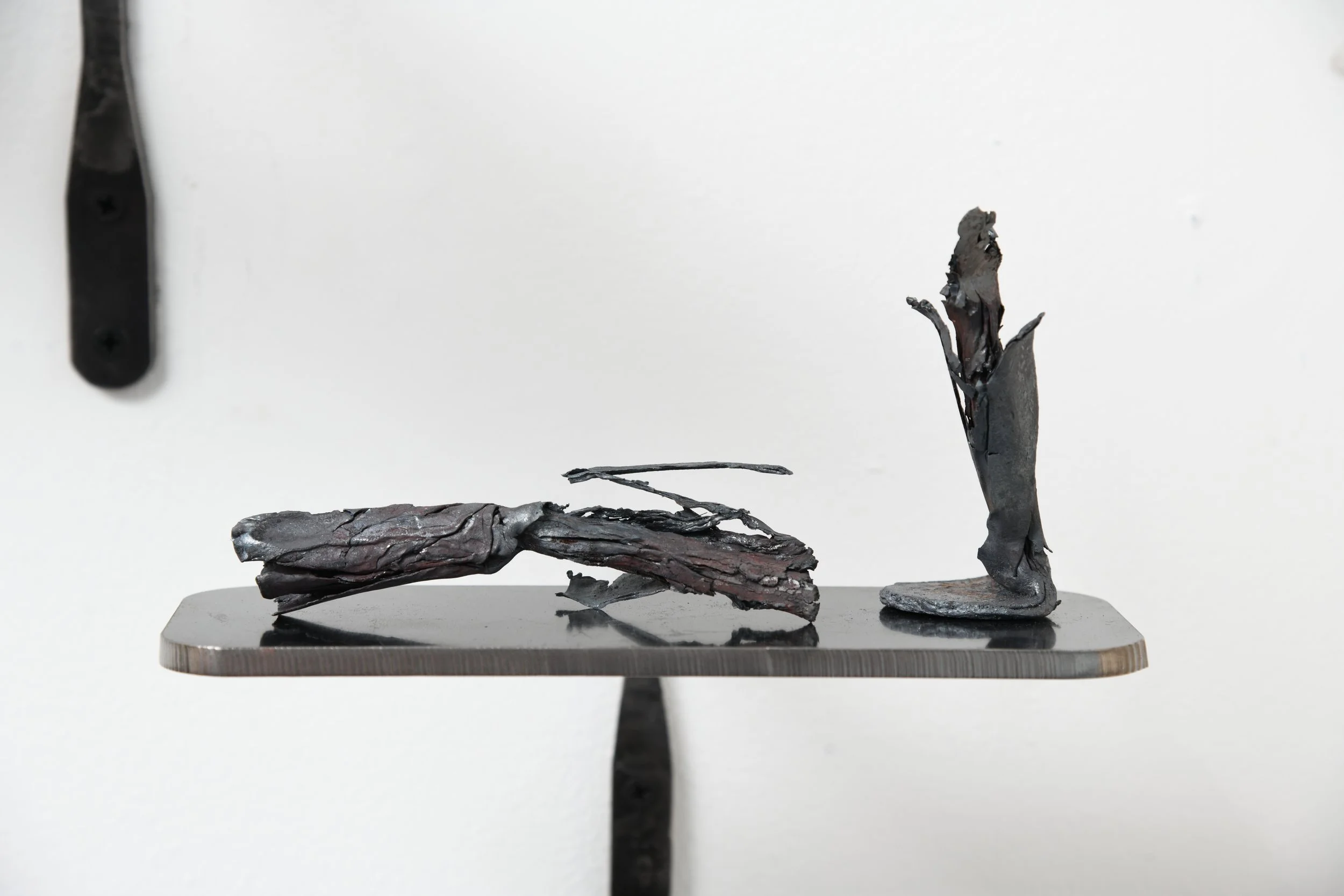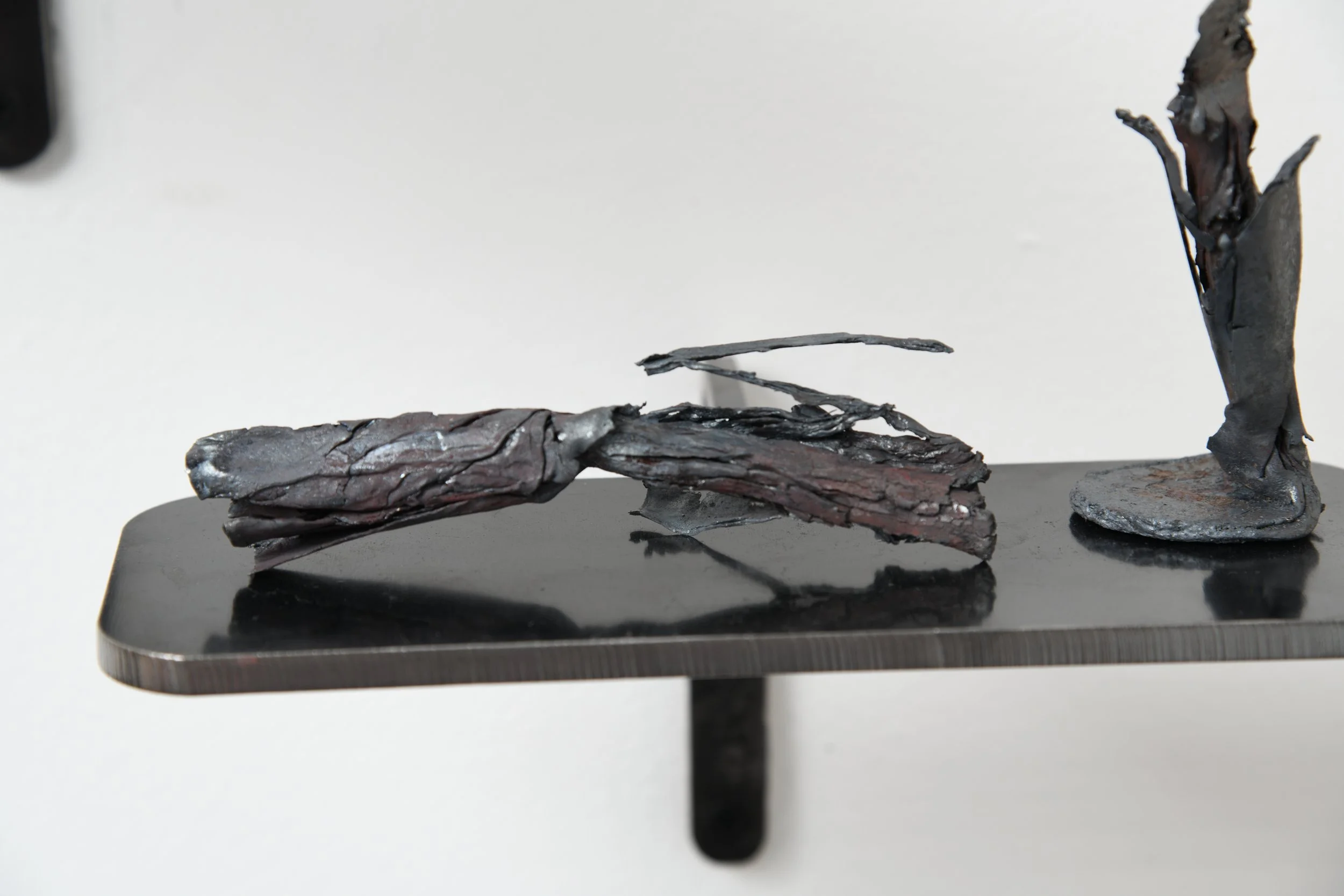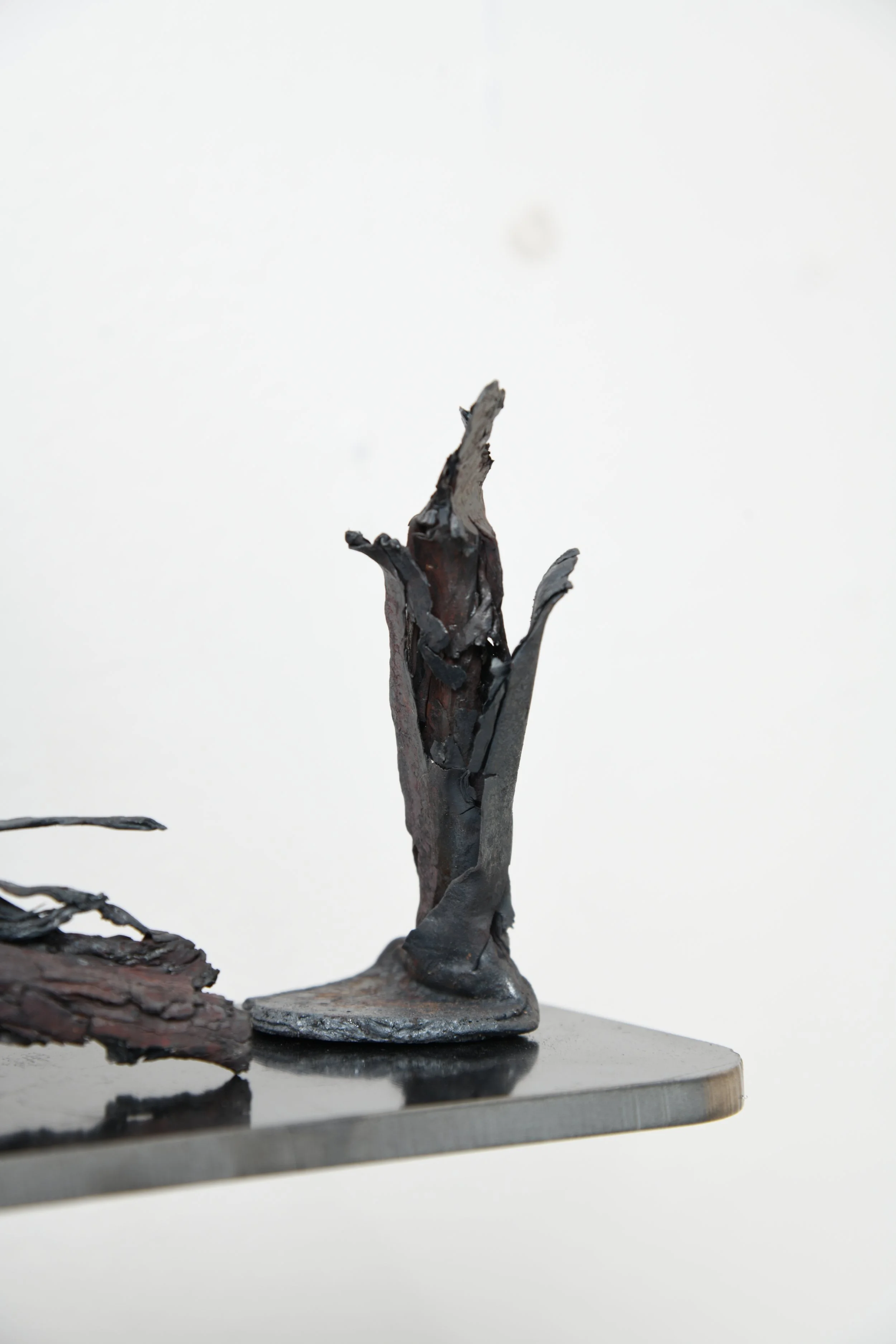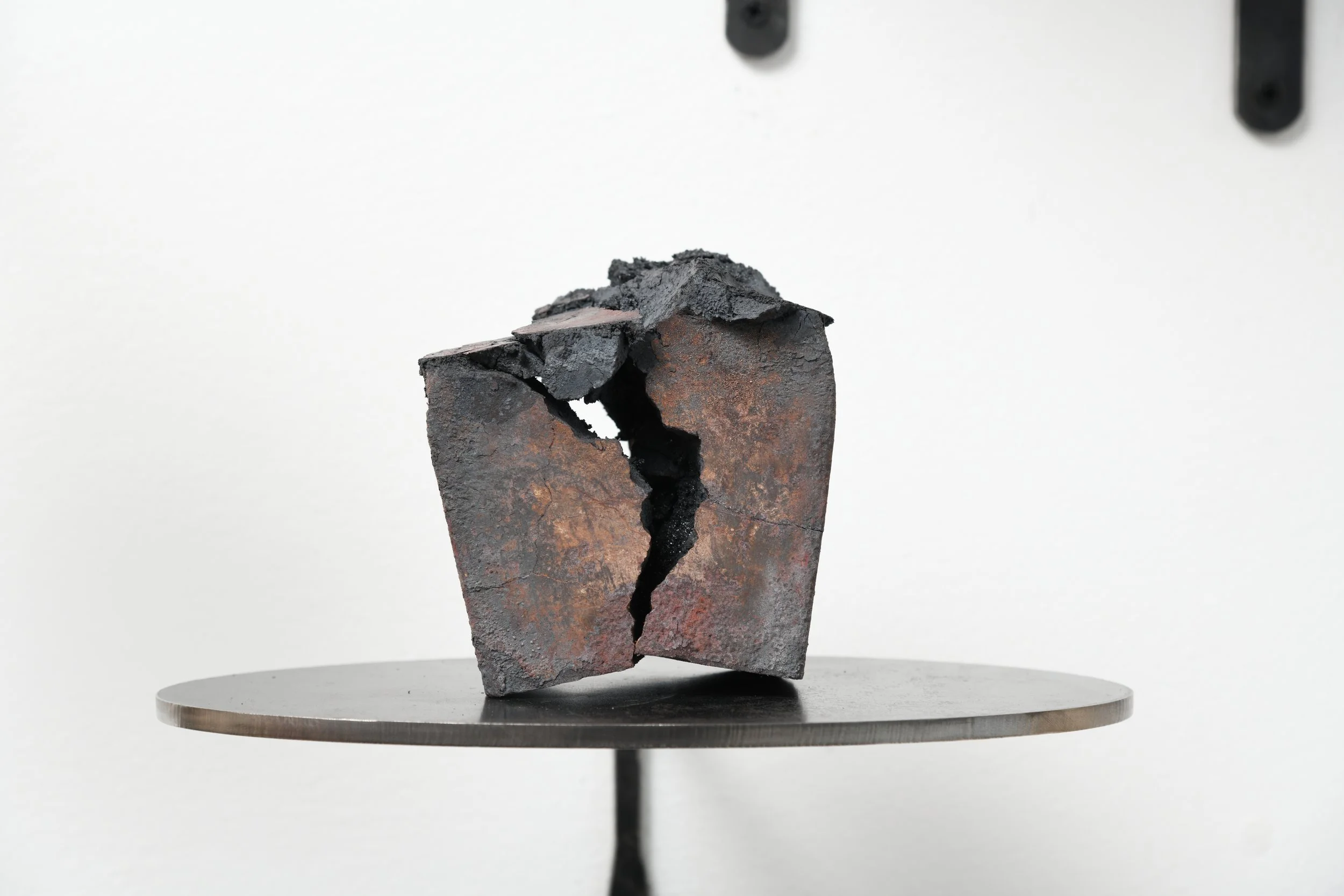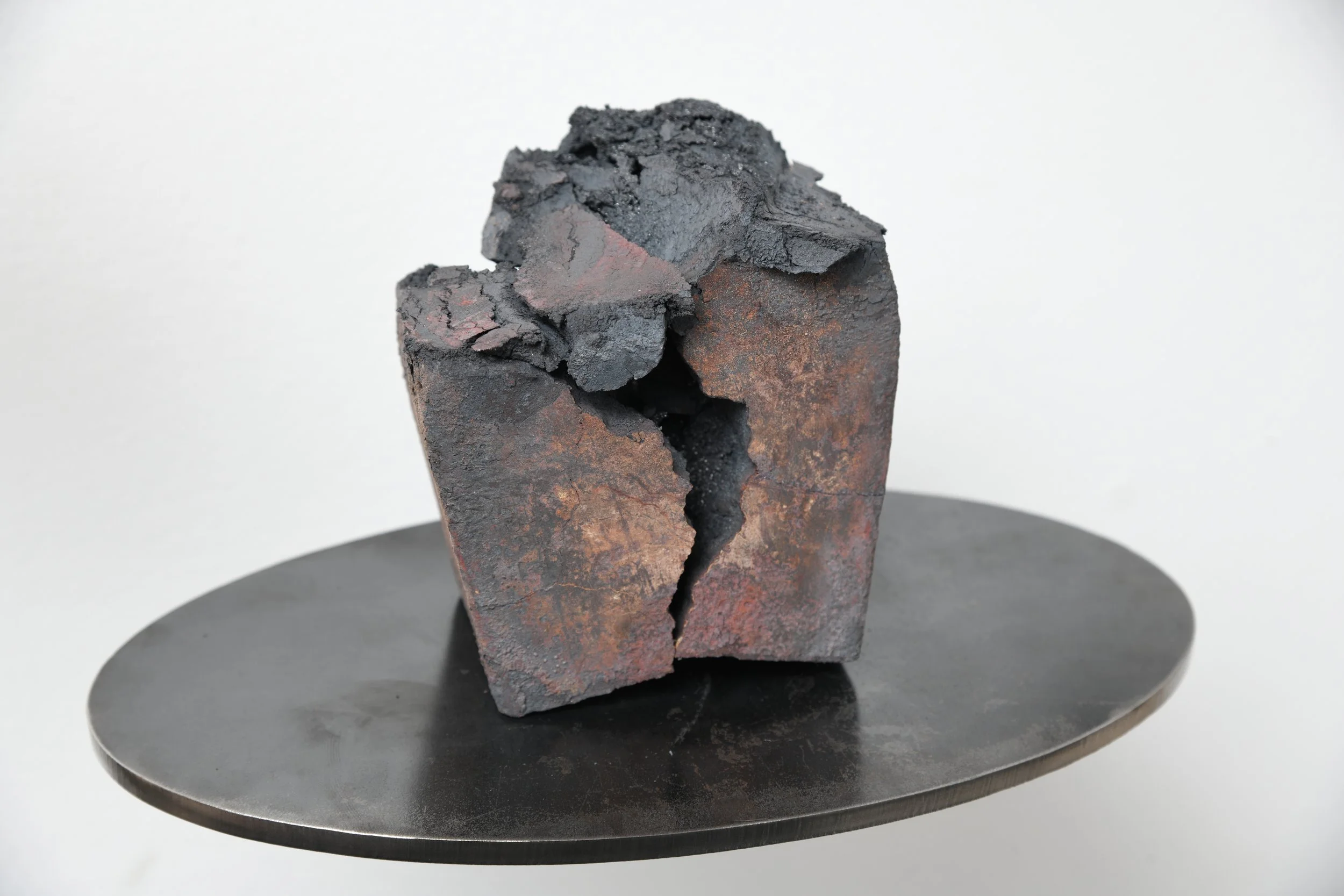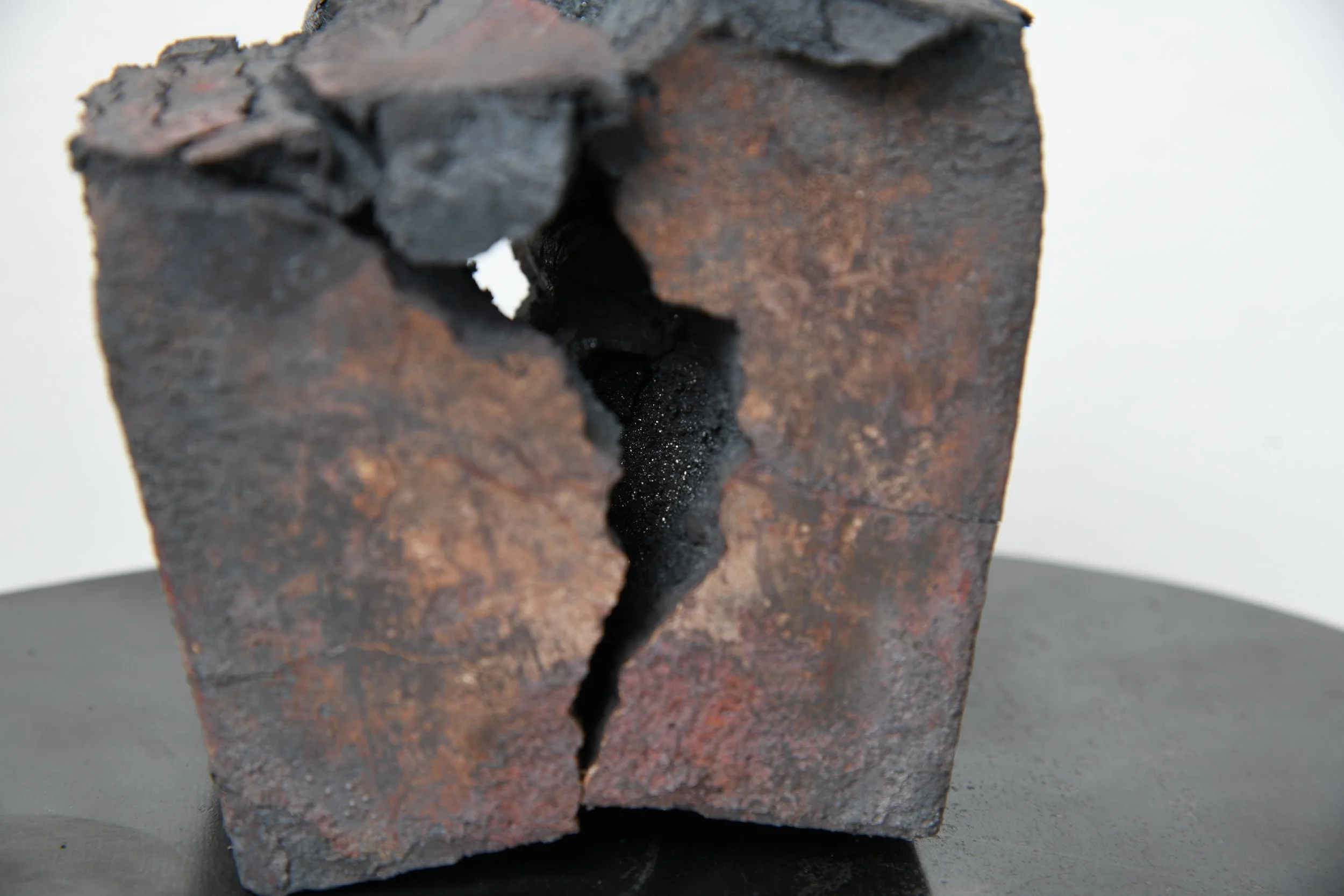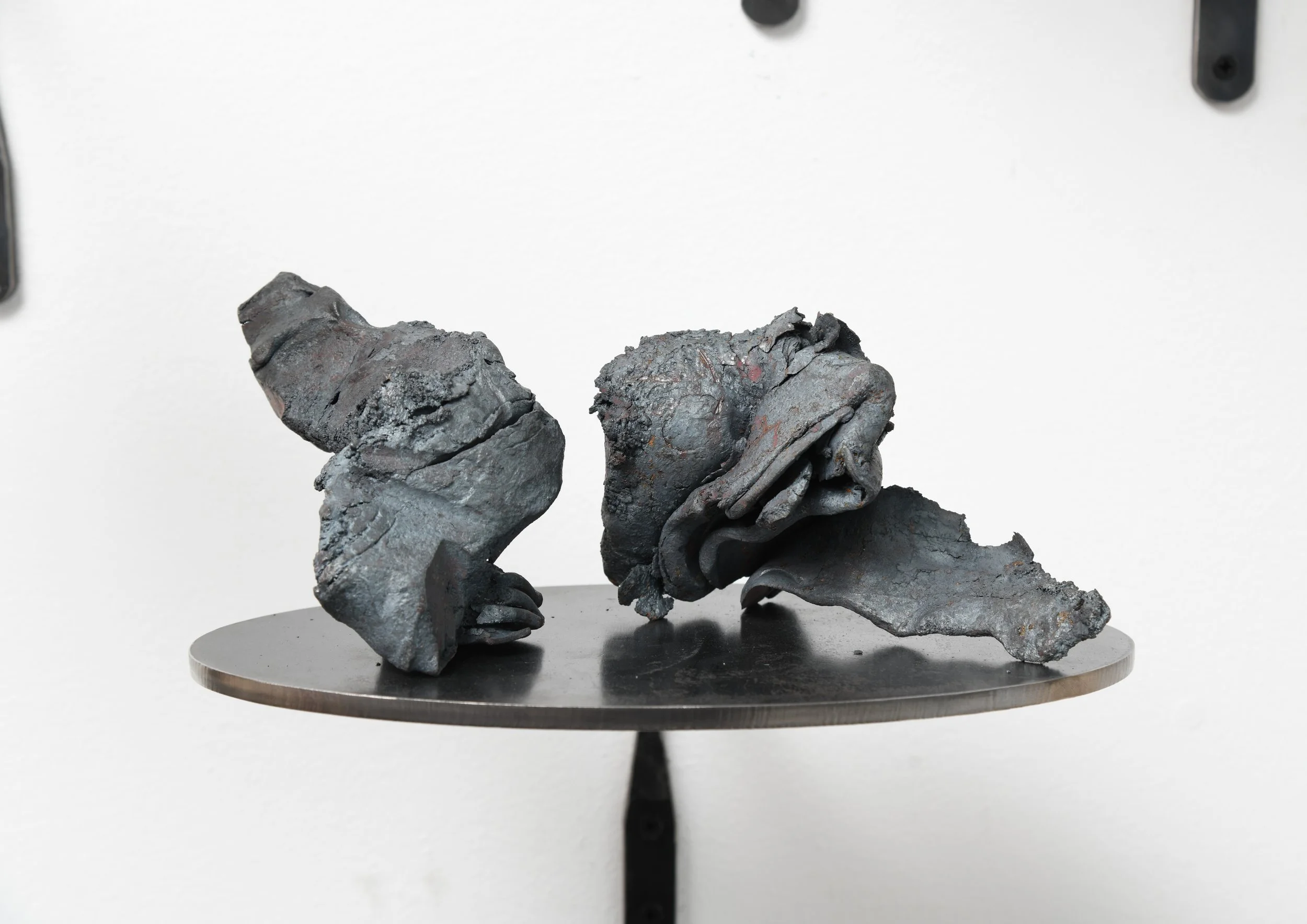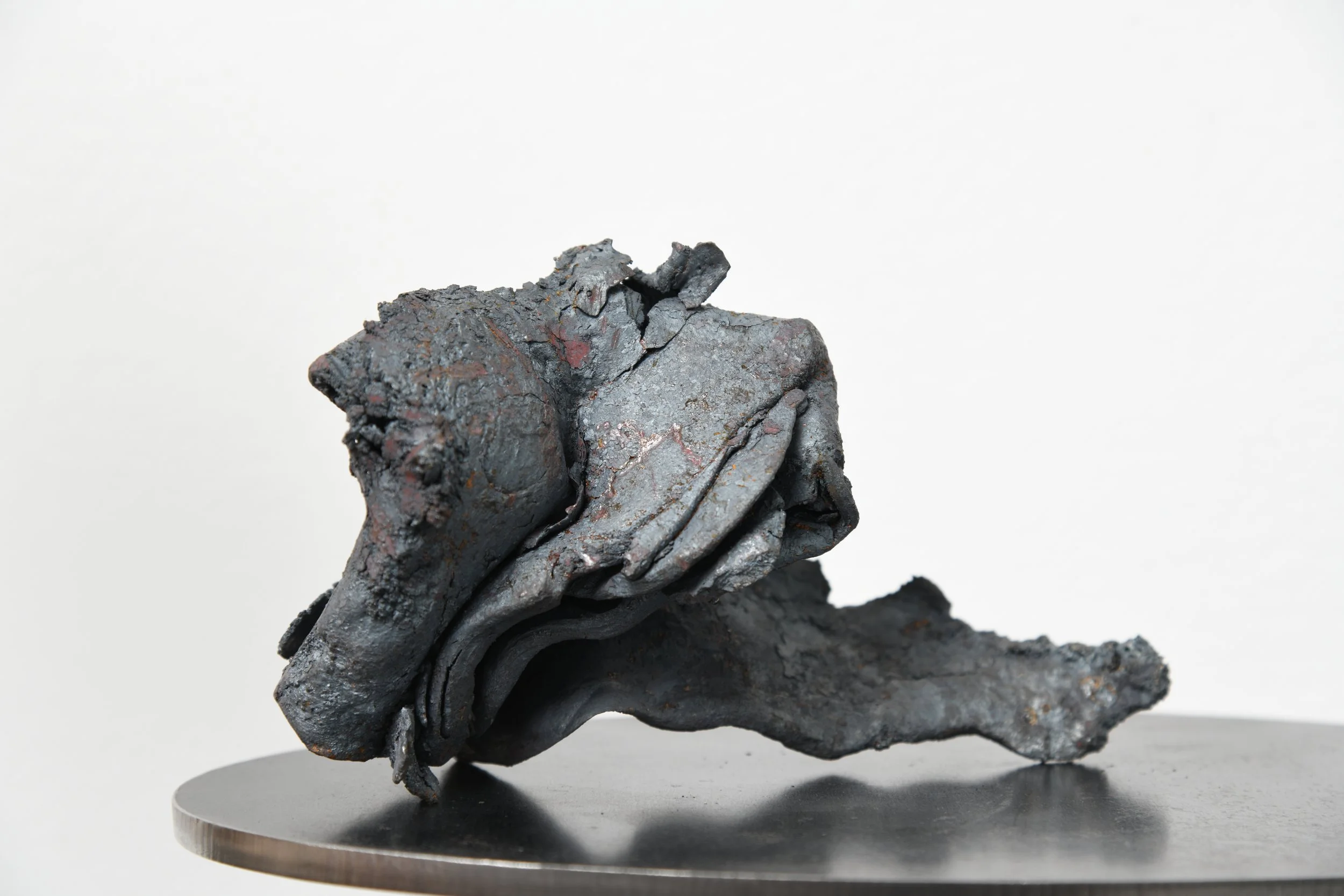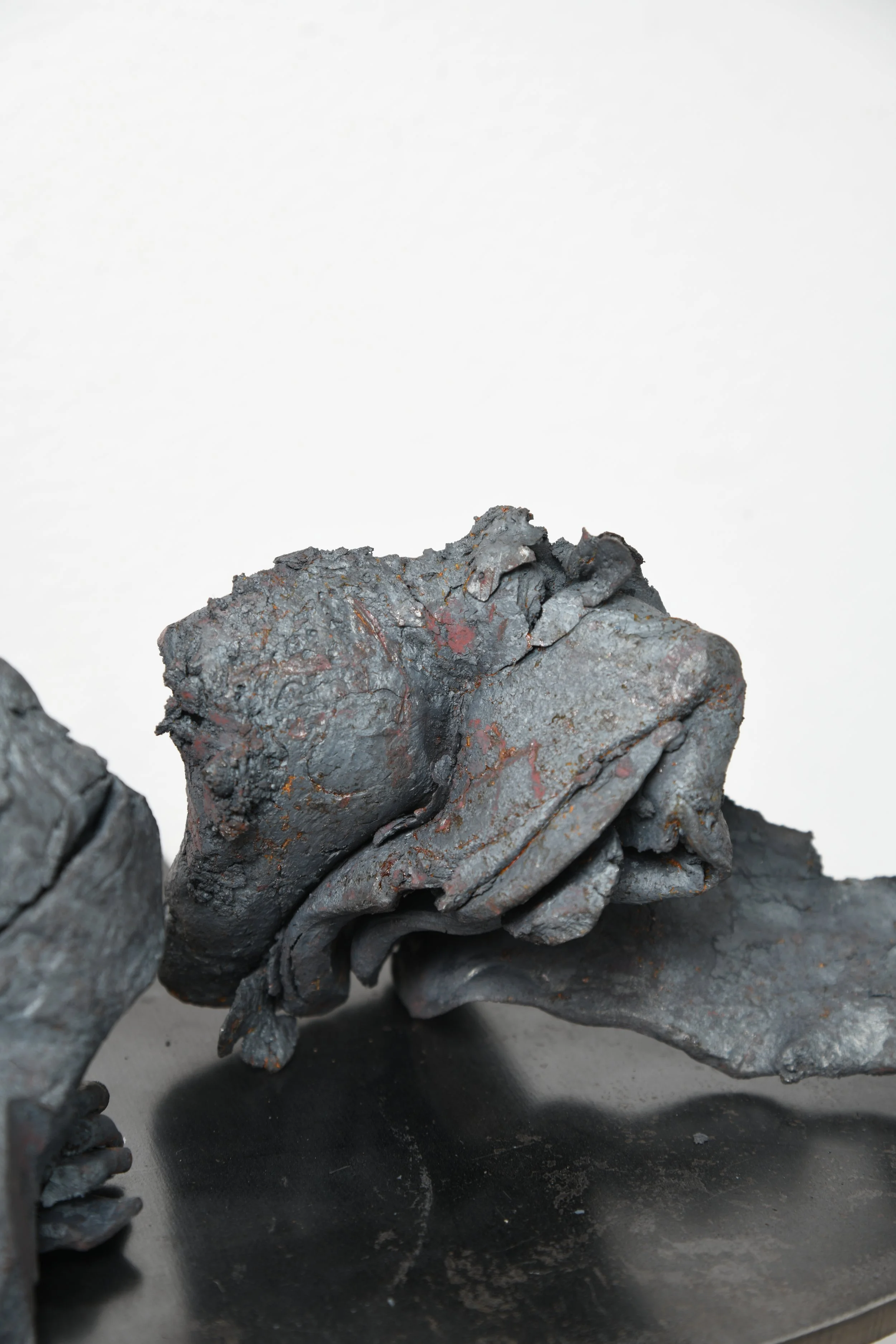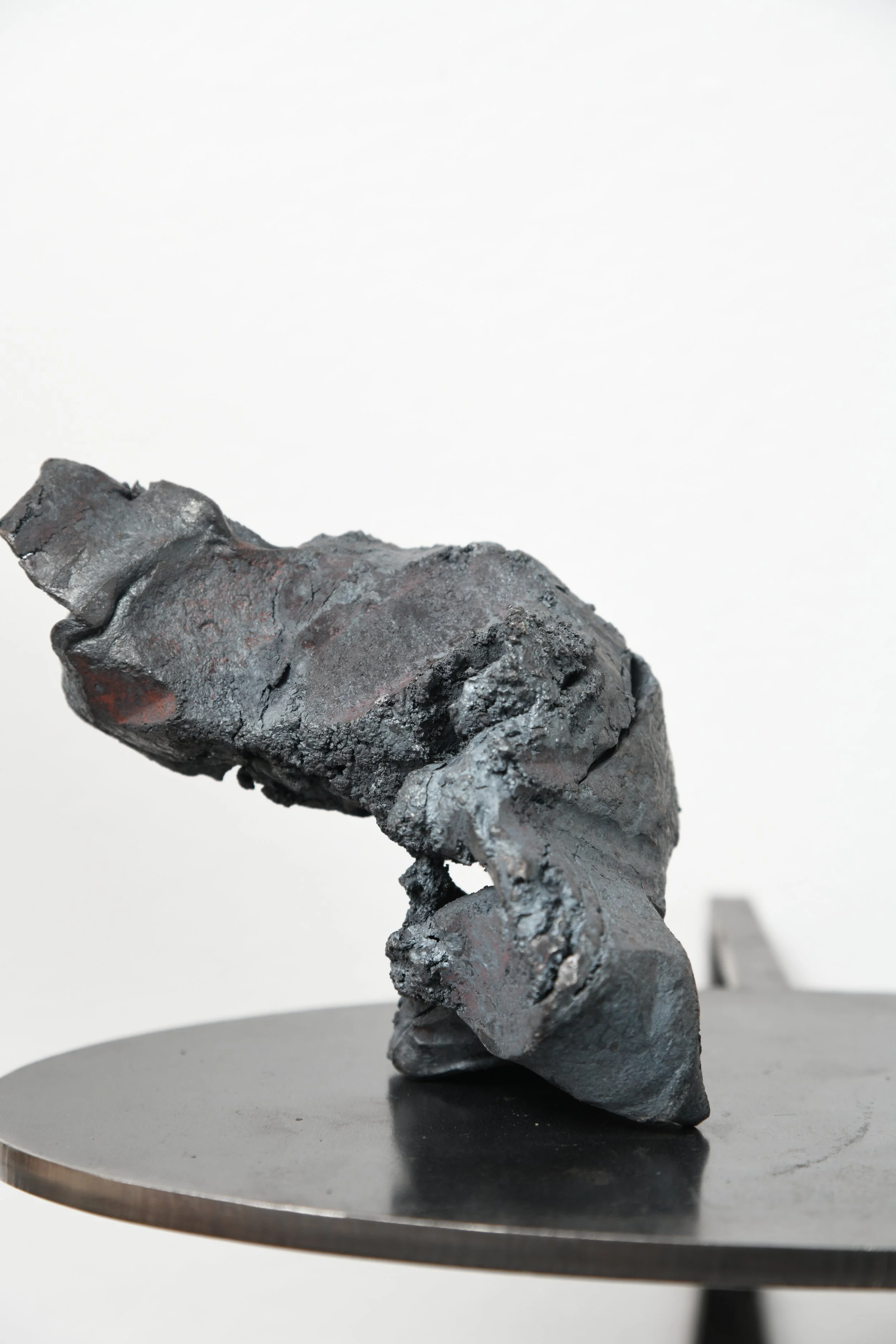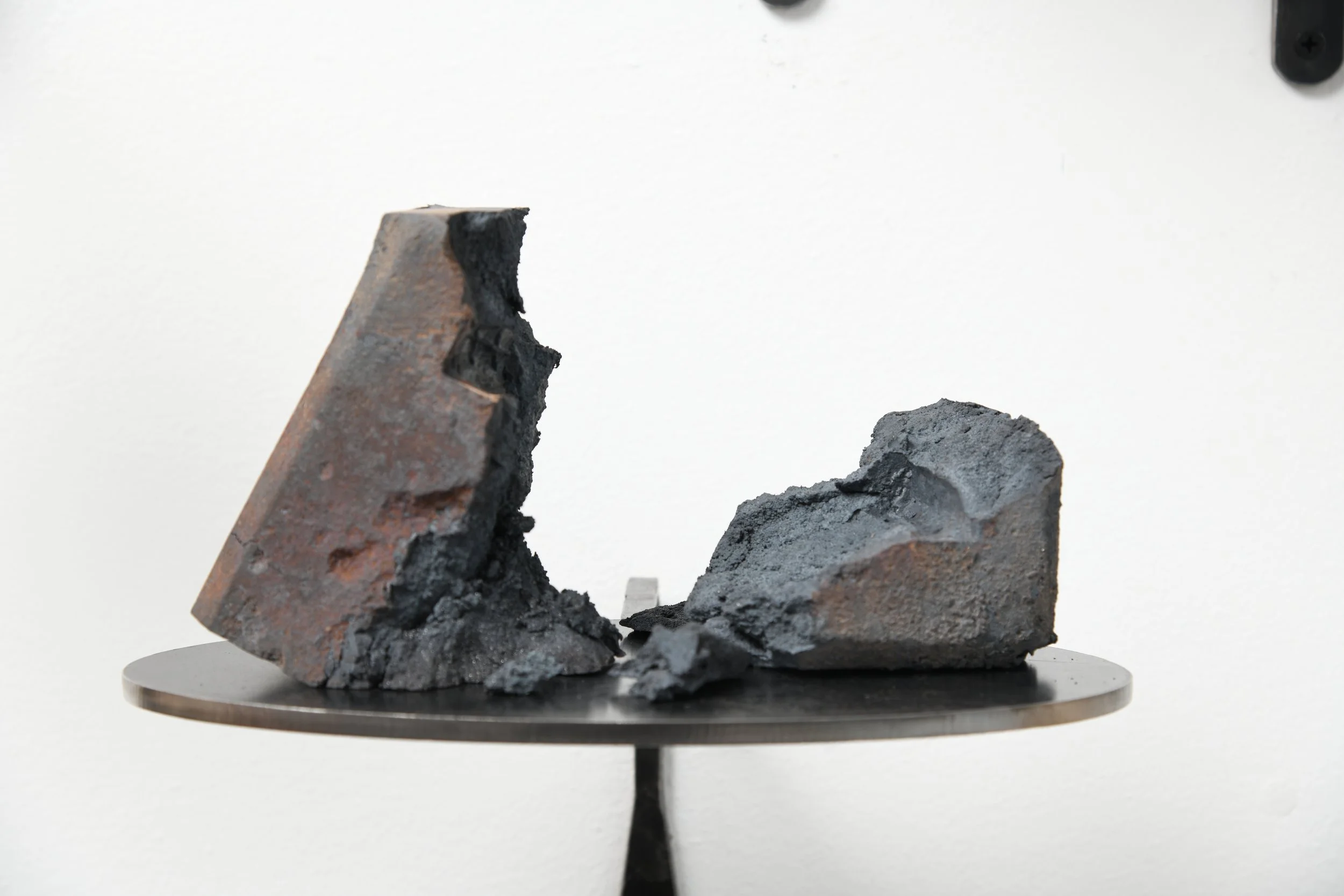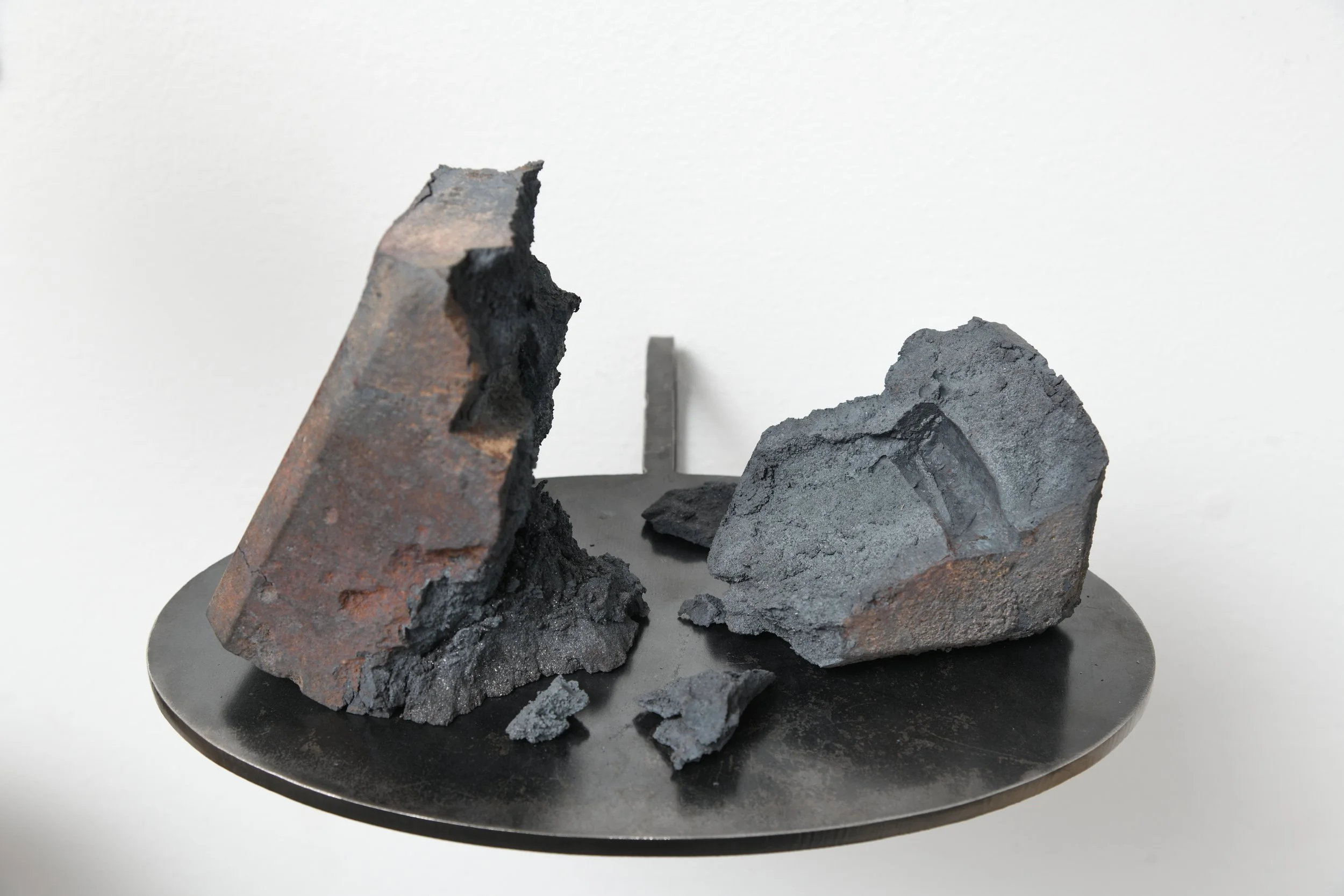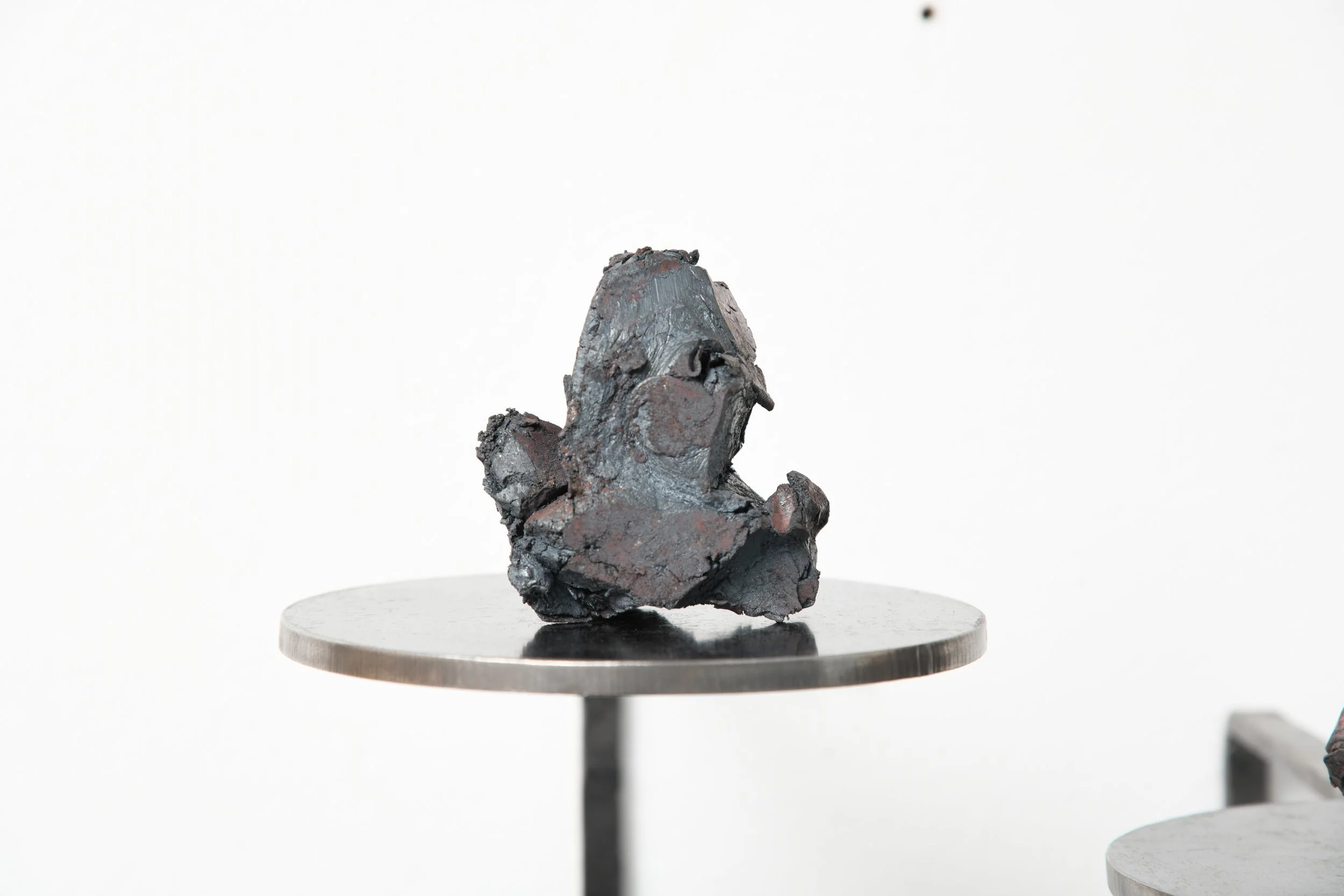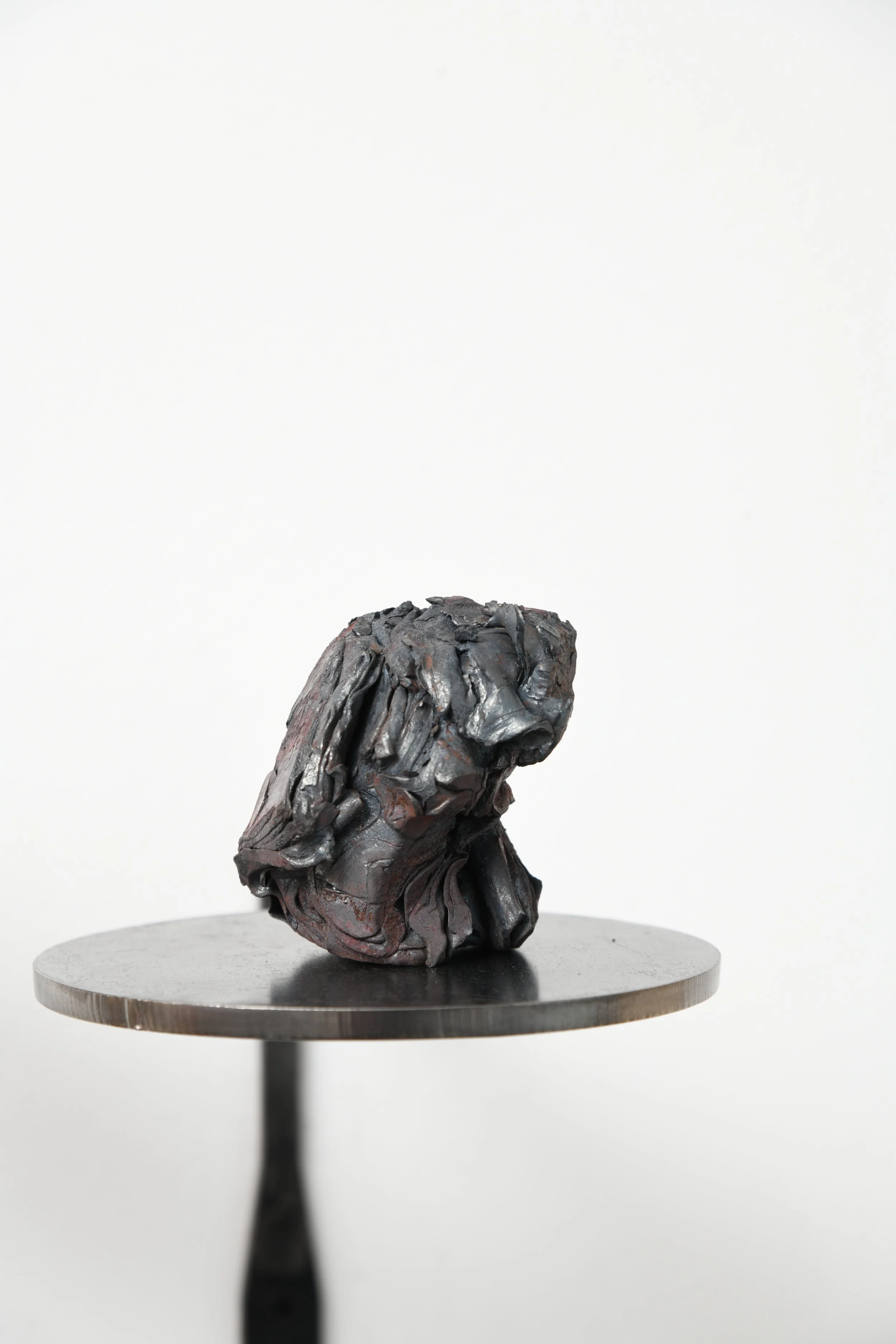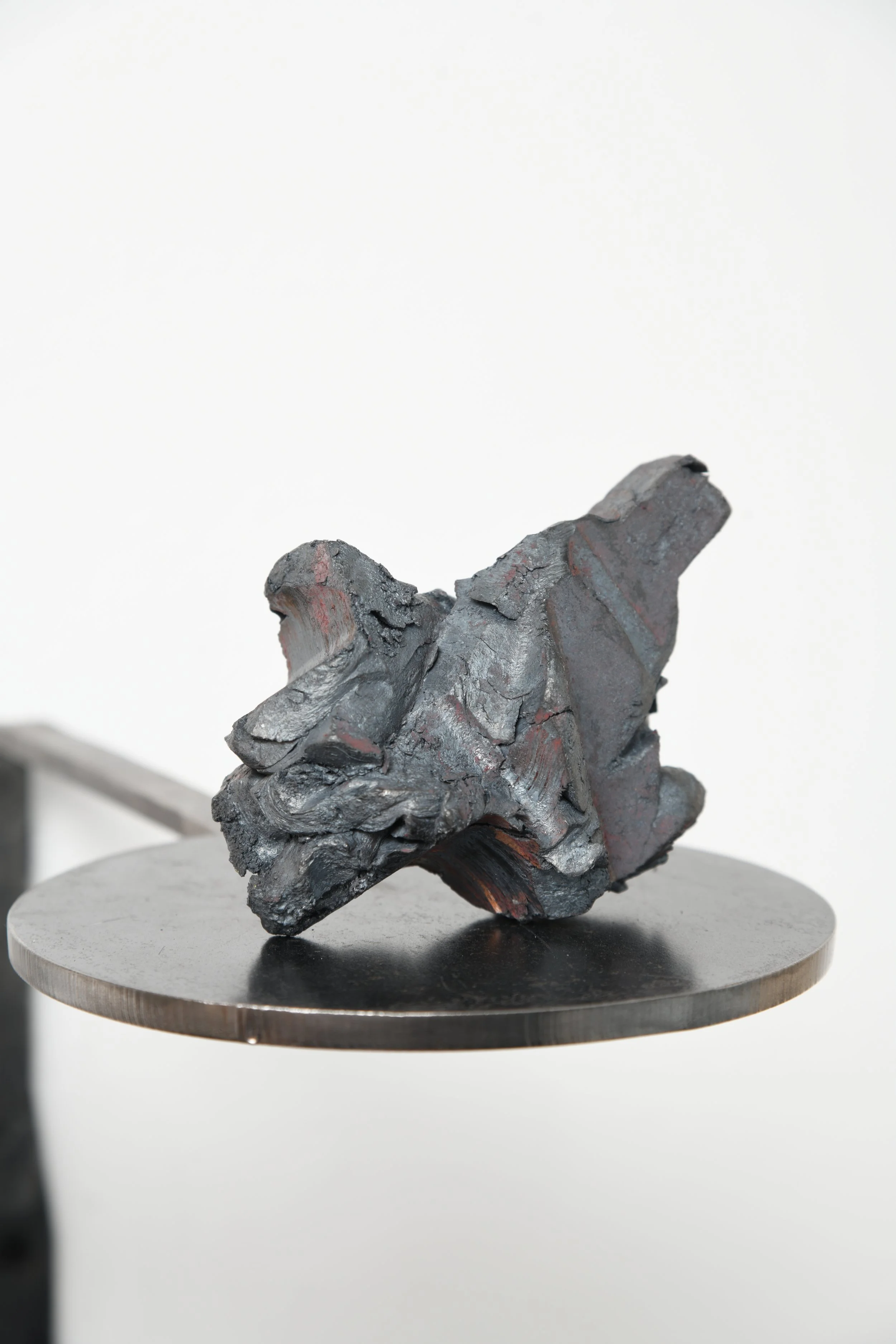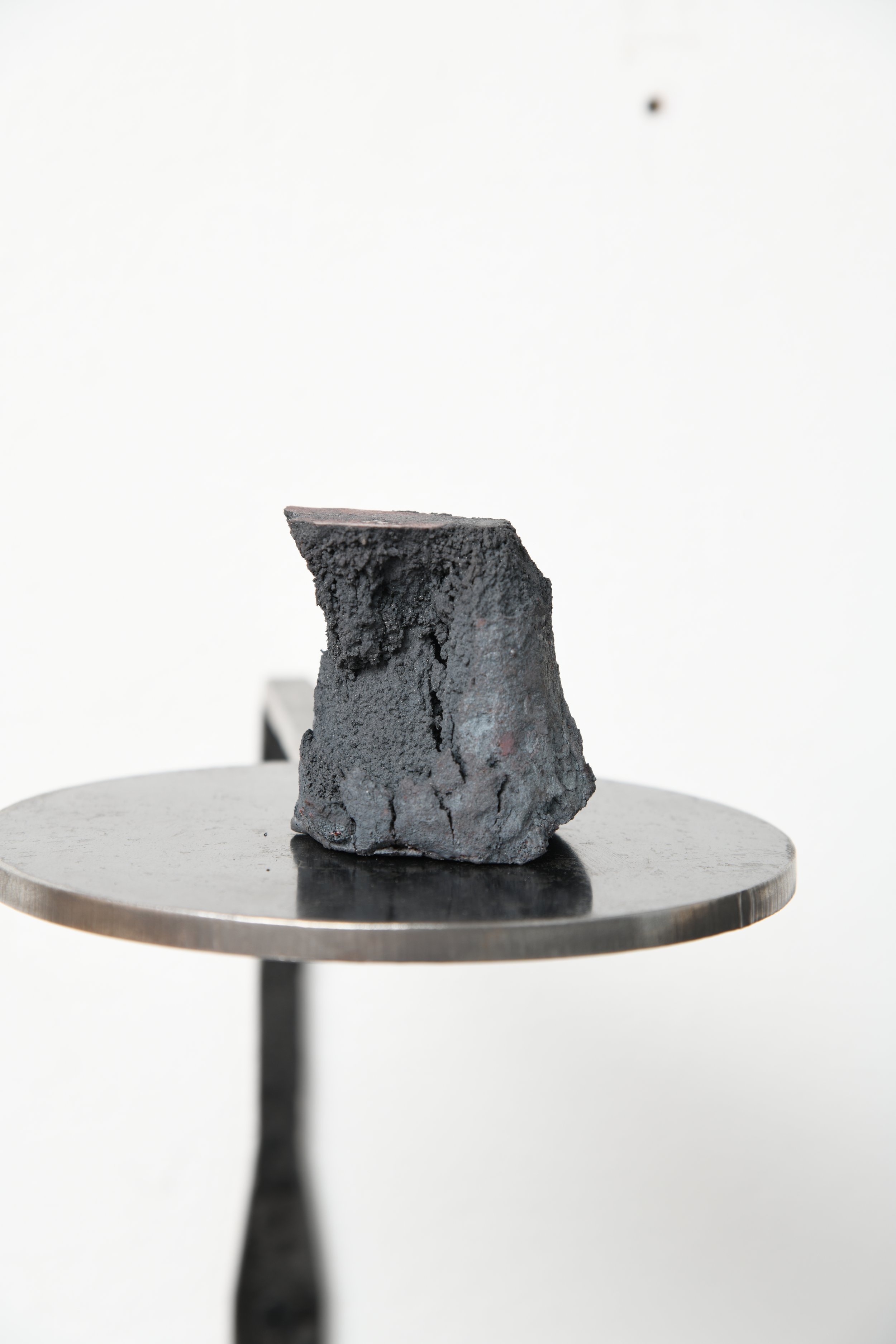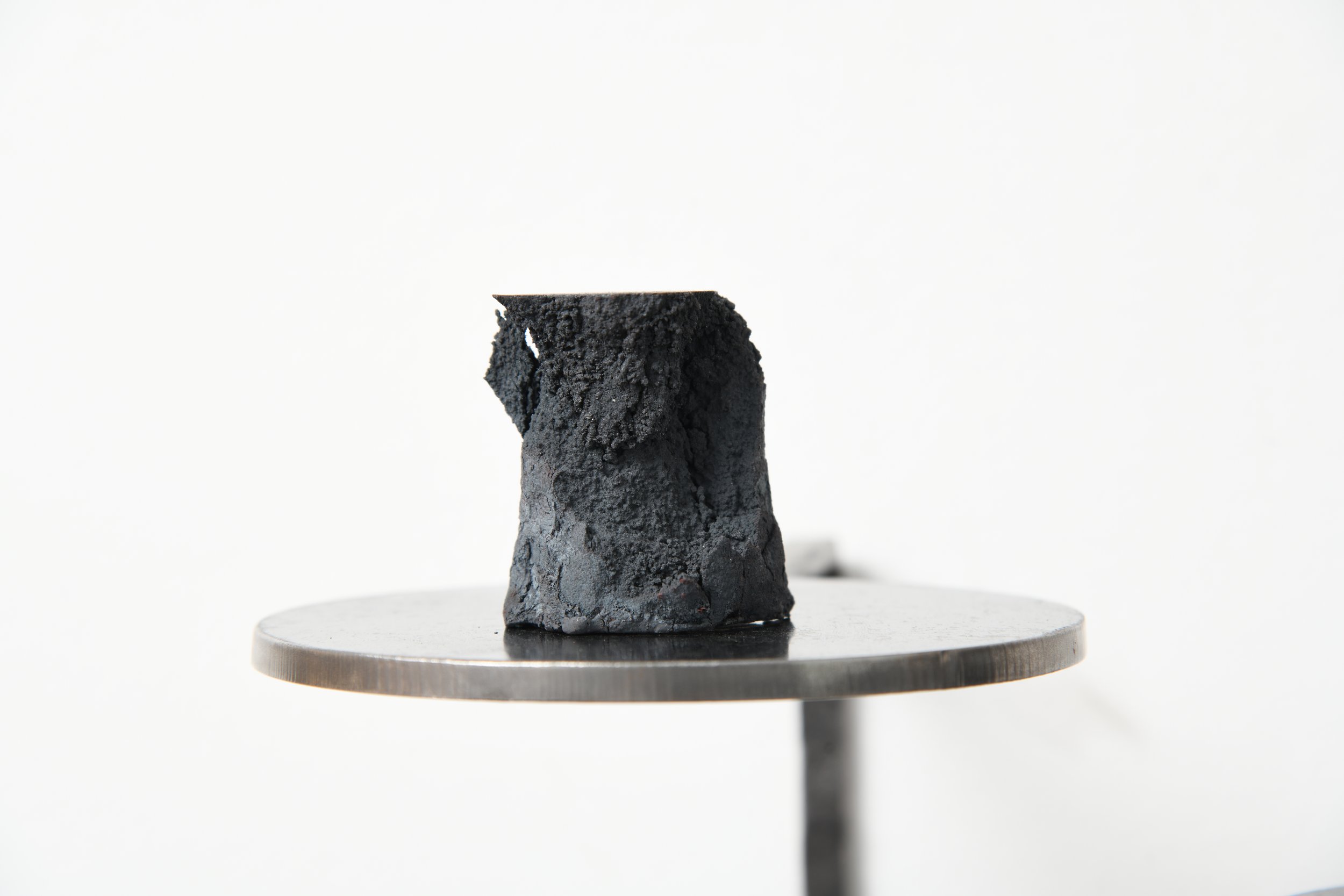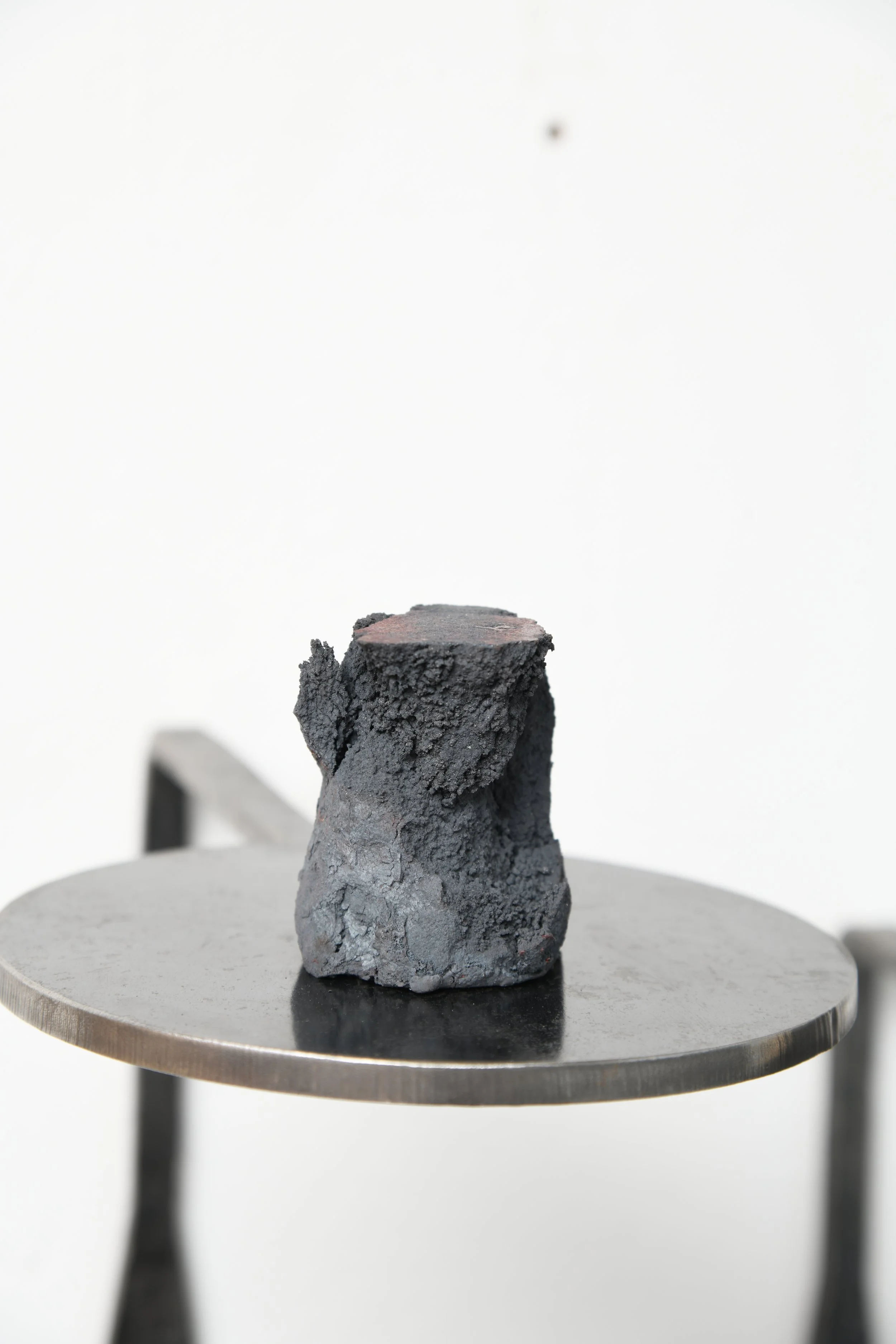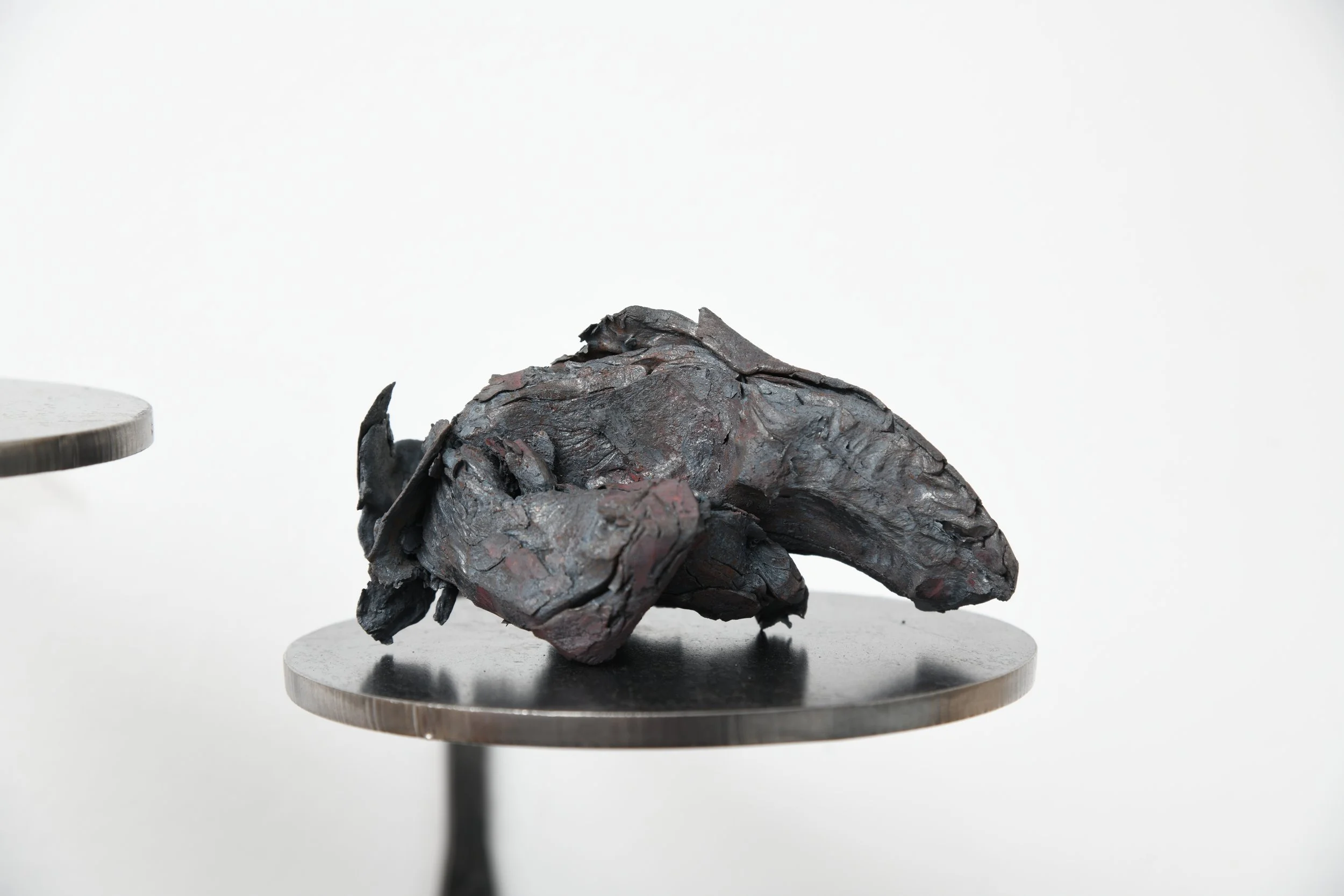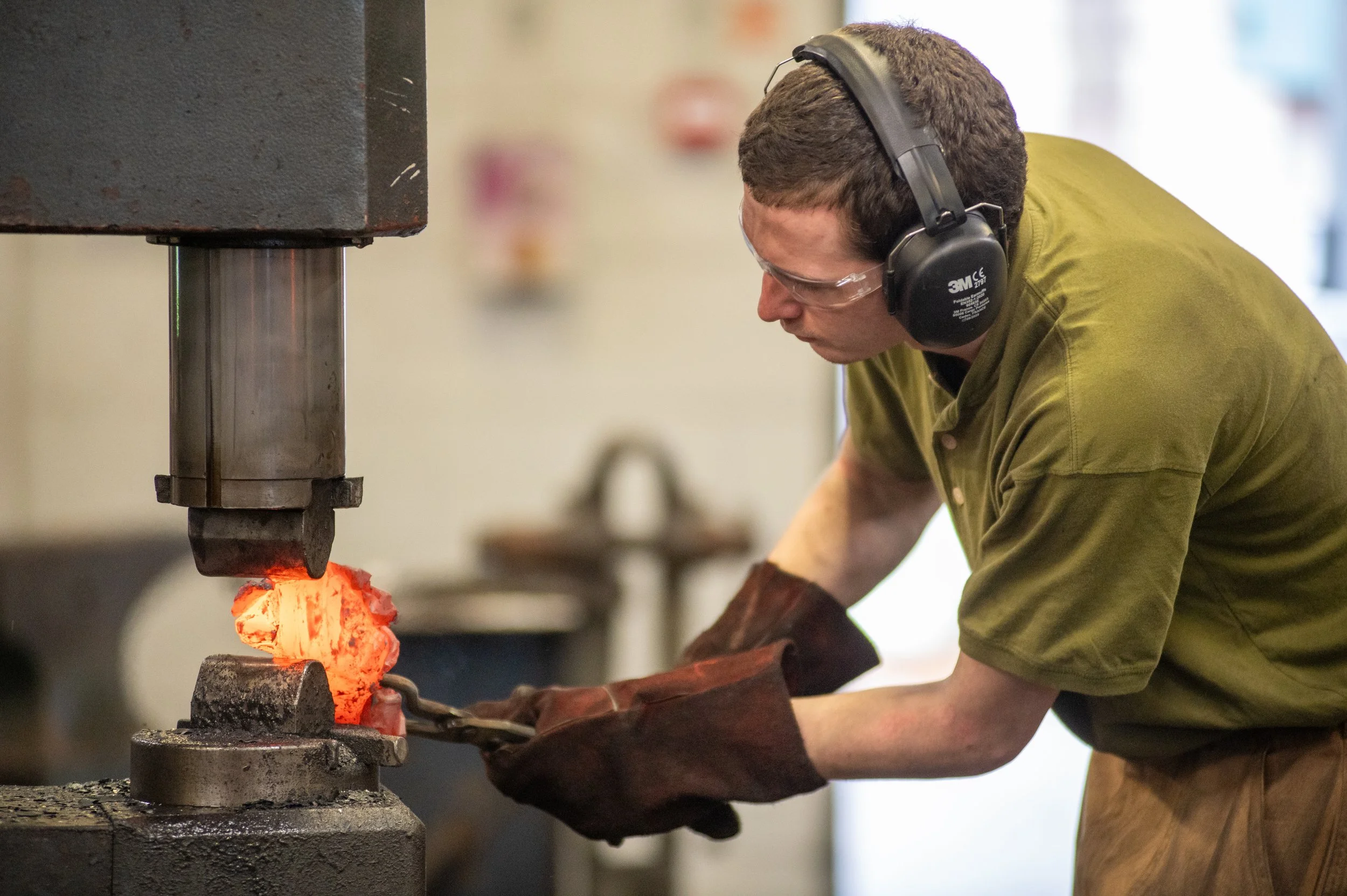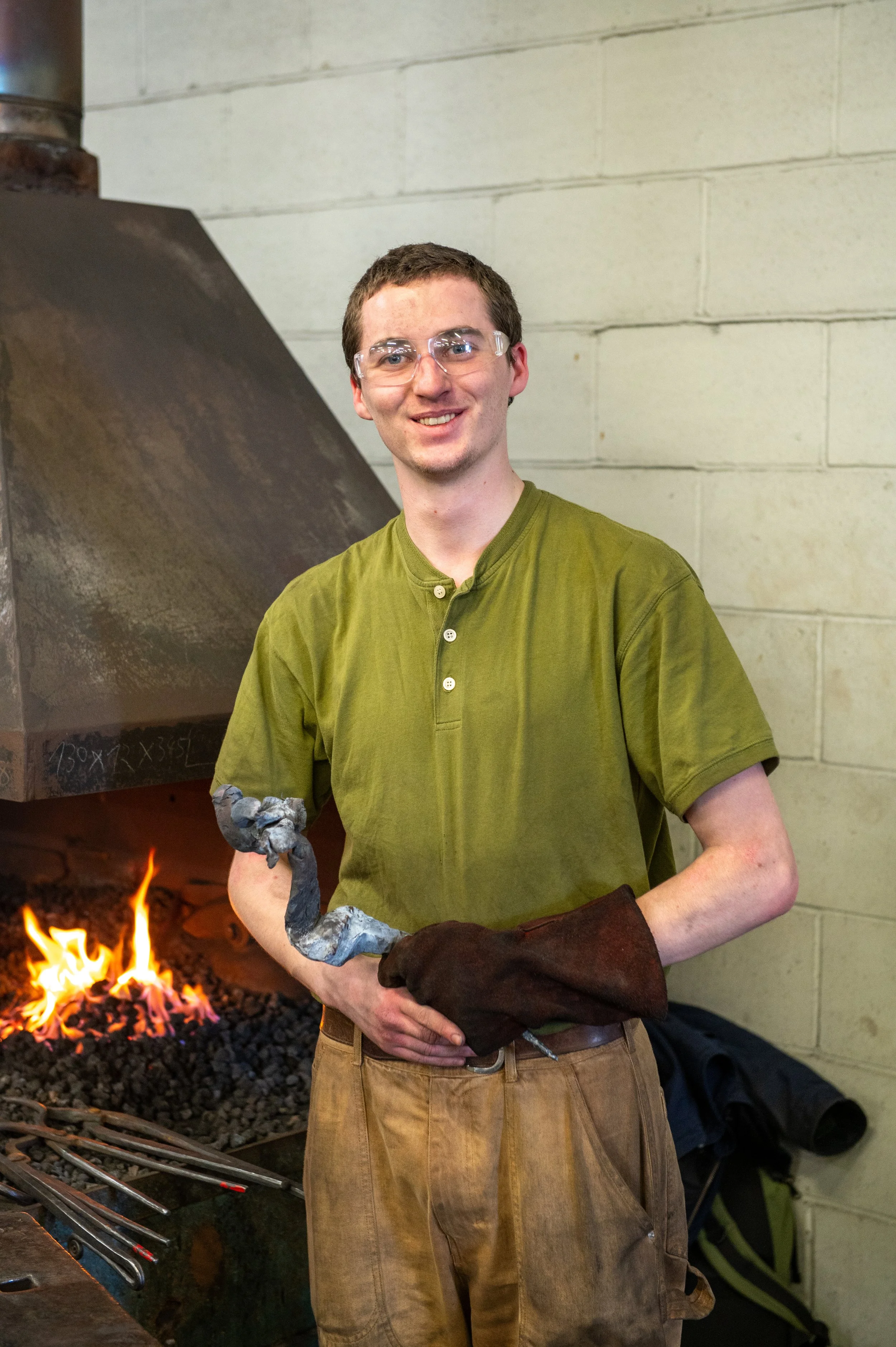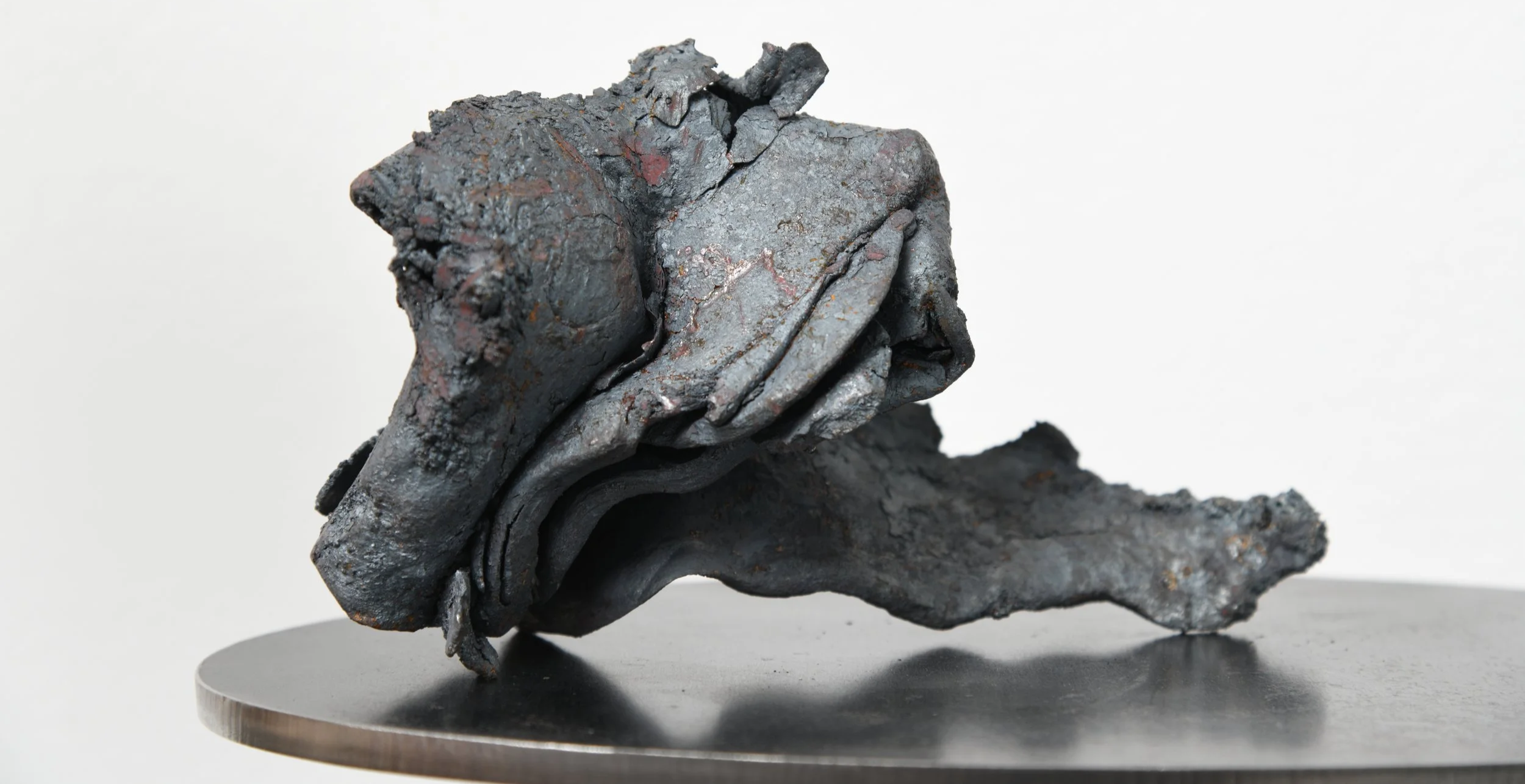
The work on display is evidencing Man’s apparent domination over Nature by exploring my apparent domination over the material. It is a visual representation of anthropocentrism and a comment on human nature; we have this sense of domination over Nature and a seemingly inherent desire to be seen. Artist Blacksmith Janne Peltokangas talks about domination and spectacle being a cover for one's own ego, and how artist tend to build “monuments to your own anxiety” (Janne Peltokangas). Where is the ego housed? Would removing the spectacle and leaving a quiet domination result in a more honest and grounded expression? Or is the ego taking place in the connection and domination of the world around us? Could it be only when domination and spectacle are combined that our ego is unearthed? Or perhaps the ego is present from the start as part of our nature? My aim for this body of work is to create a platform for discussion on this topic, I invite the viewer to read the following and to consider the role of ego and desires in their lives and the world we live in.
The point of dominance leads us to the question of anthropocentrism, human centrality and the significance of interpreting the world through the human lens, and the dominance of Man over Nature; We all have this need to preserve our life after death. One way can be through creation of physical or intellectual things, objects and techniques, Hippocrates advocated for craft and art by saying that our life is short, but if we can produce quality work that outlives us then we can endure through it, “Ars longa, vita brevis” (Hippocrates), essentially creating a way of cheating death. But it can also happen through more subtle, subconscious acts of domination, we set up a room or a counter in a certain way and not let anyone change it. We have gravestones carved to act as our physical embodiment after we are gone. These quiet acts of domination persevere after we are dead or not around to enforce them. Centuries and even millennia after their death powerful people continue to assert power and authority through busts and statues, they are one of the first things you notice when entering a room. They impose themselves within the space and all must move around it. Sculpture is special in its ability to change people's behaviour, while paintings are hidden to the side out of the way, once a sculpture is placed it then owns that space, and by proxy the person represented owns that space.
Domination over something can be a way to prove some form of adequacy. Insecurity is part of human nature and is naturally something we try to fight, and we do so with spectacle. Any form of display, especially a considered one is associated with one's ego and desire to be seen, desires are what drives us and inspires us to accomplish something with our lives, they are naturally occurring and benefit us in many ways. Philosopher David Hume thought as such, “Reason is, and ought only to be the slave of the passions, and never pretend to any other office than to serve and obey them” (David Hume), he saw reason only as a way to justify our desires, or passions as he calls them. We may also be using reason as a way to hide desires, as they can make one seem selfish or egotistical, which links back to the insecurity we hold about ourselves.
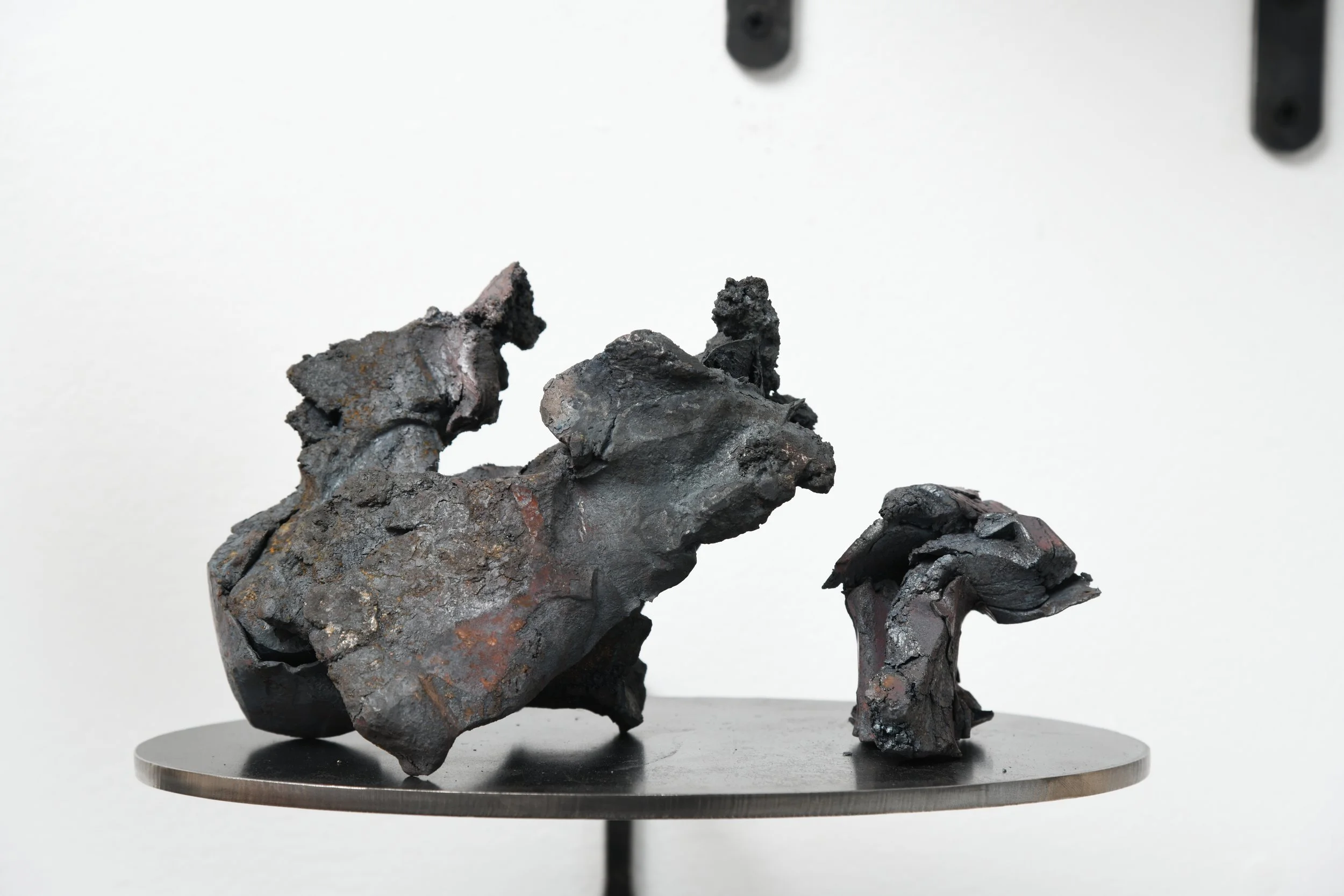
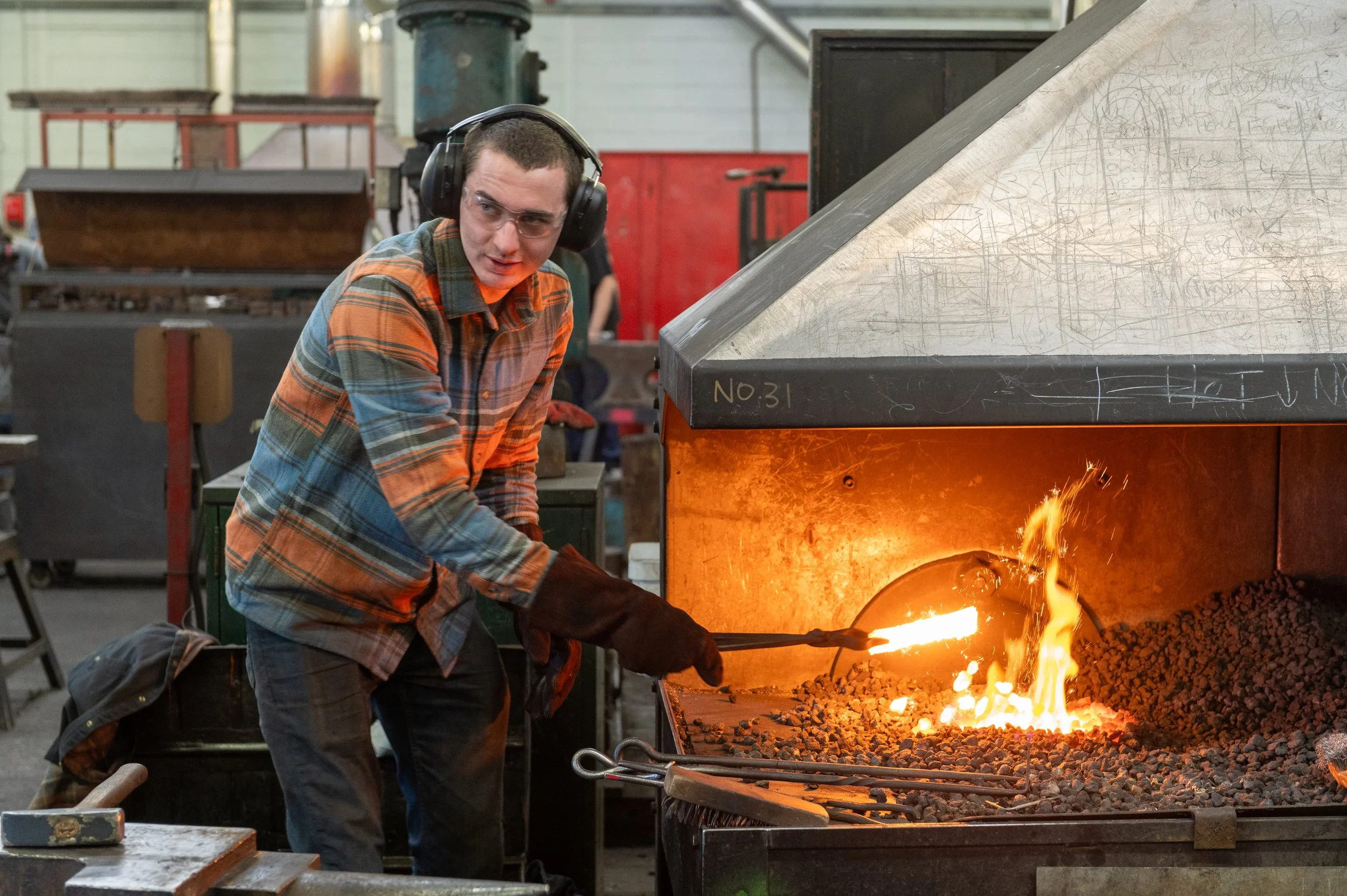
Cast iron is a material that does not like being forged. Due to its increased carbon contents compared to steel, bits of graphite are formed disrupting the crystalline structure resulting in a very brittle material. When attempted to be forge, the surface being struck crumbles aways and large cracks are formed throughout the piece in a rather dramatic fashion